

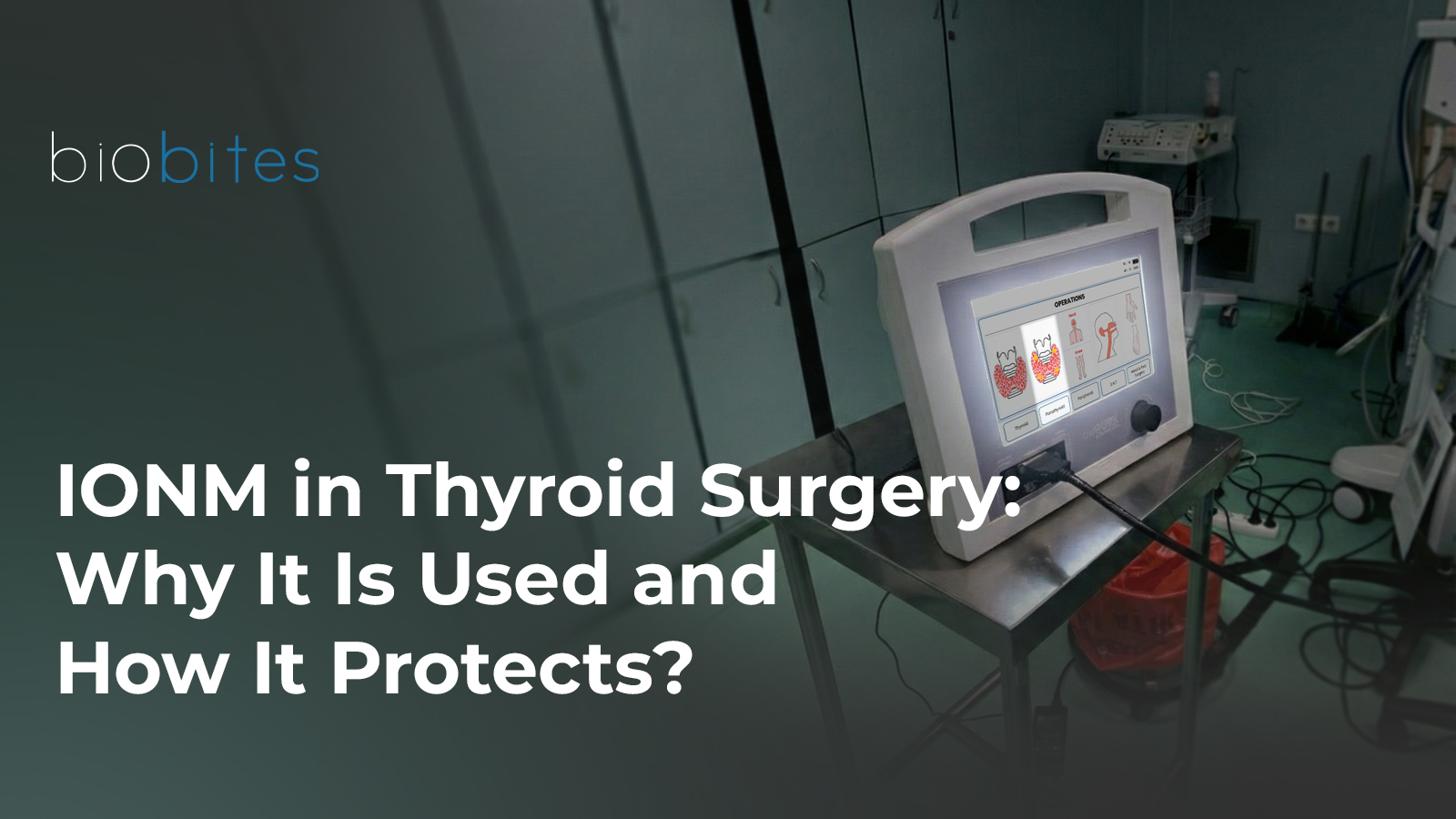
Protecting the recurrent laryngeal nerve (RLN) is one of the most critical priorities in thyroid surgery. IONM in thyroid surgery is widely used to monitor nerve function in real time and support safer surgical outcomes. Because nerve injury may lead to voice changes or airway complications, intraoperative neuromonitoring has become an important supportive tool in modern thyroid procedures.
What Is IONM in Thyroid Surgery?
Intraoperative Neuromonitoring (IONM) is a technique that enables real-time monitoring of the electrical activity of nerves during surgery. It allows continuous assessment of nerve function and supports immediate response if a potential risk of nerve injury is detected.
The primary goal of IONM in thyroid surgery is to protect nerve function throughout the operation and reduce the likelihood of neurological injury. Clinical studies suggest that neuromonitoring may help decrease the incidence of recurrent laryngeal nerve injury, particularly in complex thyroidectomy cases.
IONM is especially useful in high-risk surgical procedures where nerves are more vulnerable to damage.
Risks in Thyroid Surgery
Although thyroid surgery is generally safe, certain complications may occur.
One of the most significant risks is injury to the recurrent laryngeal nerve, which controls the vocal cords and may result in hoarseness or voice changes. RLN injury can be temporary or permanent.
Damage to the parathyroid glands may also occur, leading to hypocalcemia or hypoparathyroidism due to calcium imbalance. Bleeding and hematoma formation are rare but may compromise the airway. Minor complications such as infection or seroma can develop at the surgical site. In some cases, hypothyroidism may occur, requiring lifelong hormone replacement therapy.
Although the overall complication rate is low, surgical experience and thorough anatomical knowledge significantly reduce these risks. International endocrine surgery guidelines also recognize nerve monitoring as a supportive tool, particularly in selected high-risk cases.
The Role of the Recurrent Laryngeal Nerve in Thyroid Surgery
The recurrent laryngeal nerve (RLN) is essential for vocal cord movement and plays a critical role in voice function and airway protection.
IONM is an electrophysiological method used to monitor RLN function in real time during thyroid surgery. This monitoring helps evaluate whether nerve function is preserved and assists the surgeon in detecting potential nerve stress or injury.
IONM is particularly beneficial when anatomical variations are present or when surgical dissection is technically challenging. In such situations, it supports nerve identification and functional confirmation, complementing visual assessment.
While experienced surgeons rely on visual nerve identification, IONM in thyroid surgery provides additional functional feedback, which may enhance intraoperative decision-making and overall surgical safety.
When Is IONM Especially Valuable in Thyroid Surgery?
IONM is especially valuable in cases where the risk of nerve injury is increased or when visual identification of the RLN is difficult.
These situations include:
- Revision thyroid surgery
- Large goiters or retrosternal extension
- Invasive thyroid cancer
- Complex anatomical conditions
In these cases, IONM in thyroid surgery supports safer nerve identification and functional preservation. It is also beneficial when there is a risk of bilateral nerve injury or when nerve dissection is particularly demanding.
Frequently Asked Questions About IONM in Thyroid Surgery
- Is IONM mandatory in thyroid surgery?
No. IONM is not mandatory; however, it improves surgical safety in high-risk cases. - Does IONM completely prevent nerve injury?
No. It reduces the risk but does not provide absolute protection. - Can the recurrent laryngeal nerve be preserved without IONM?
Yes. Experienced surgeons may preserve the nerve through visual identification. IONM provides additional functional support.
References
- Ghatol D, et al. Intraoperative Neurophysiological Monitoring. StatPearls, NCBI Bookshelf (2023).
- Gertsch JH, et al. Practice guidelines for intraoperative neurophysiological monitoring. J Clin Monit Comput (2019)
- Kim SM, et al. Intraoperative Neurophysiologic Monitoring. J Korean Med Sci (2013)
- Choi SY, et al. Intraoperative Neuromonitoring for Thyroid Surgery (PMC).