


The future of home mechanical ventilation is being shaped by rapid technological innovation, expanding clinical indications, and evolving models of patient-centered care. Once considered a niche intervention, home mechanical ventilation (HMV) has become a cornerstone therapy for individuals living with chronic respiratory failure.
Advances in smart ventilator systems, telemonitoring infrastructure, artificial intelligence–assisted ventilation modes, and integrated digital health ecosystems are redefining how long-term respiratory support is delivered beyond hospital walls. Today’s home ventilation landscape is no longer defined solely by mechanical support—it is defined by connectivity, adaptability, and data-driven decision-making.
Technological Advances in Home Mechanical Ventilation
Over the past two decades, home mechanical ventilation (HMV) has undergone a remarkable transformation. What began as a limited intervention for a select few has evolved into a highly personalized and technologically dynamic domain of respiratory care. This significant shift is largely attributable to innovations in ventilator hardware, advanced embedded monitoring systems, cloud-based data management platforms, and artificial intelligence (AI).
The result of these advancements is a new generation of ventilators that are smarter, safer, more accessible, and increasingly responsive to the fluctuating needs of patients living with chronic respiratory failure.
Compact and Portable Ventilator Platforms
Modern home ventilators are specifically designed to combine hospital-grade capabilities with user-friendly interfaces and compact mobility. Contemporary advanced home ventilator platforms exemplify this new standard. These systems support a comprehensive array of ventilation modes—including volume- and pressure-controlled ventilation, CPAP, BiPAP, spontaneous/timed (S/T) backup modes, and volume-assured pressure support—while maintaining portability through lightweight design and long-life batteries.
According to Fagondes et al. (2025), these devices offer flexibility in ventilation modes and integrate circuit compensation, programmable alarms, humidification options, and oxygen delivery interfaces (1). This allows reliable long-term use in both invasive and non-invasive applications.
Crimi et al. (2019) observed that, particularly in neuromuscular disease populations, the incorporation of simplified graphical displays and ergonomic interfaces improved adherence and reduced user anxiety (5).
Modern home-use ventilators are engineered to deliver full-scale ventilatory support in portable formats.
These systems typically offer:
- Dedicated oxygen portsrgonomic interfaces have been associated with reduced anxiety and improved long-term compliance.
- Dual compatibility for non-invasive (NIV) and invasive mechanical ventilation (IMV)
- Multiple advanced ventilation modes tailored to diverse patient needs
- Extended battery life (typically 8–12 hours), enhancing mobility
- Integrated humidification compatibility
- Comprehensive alarm systems
Remote Monitoring and Telehealth Integration
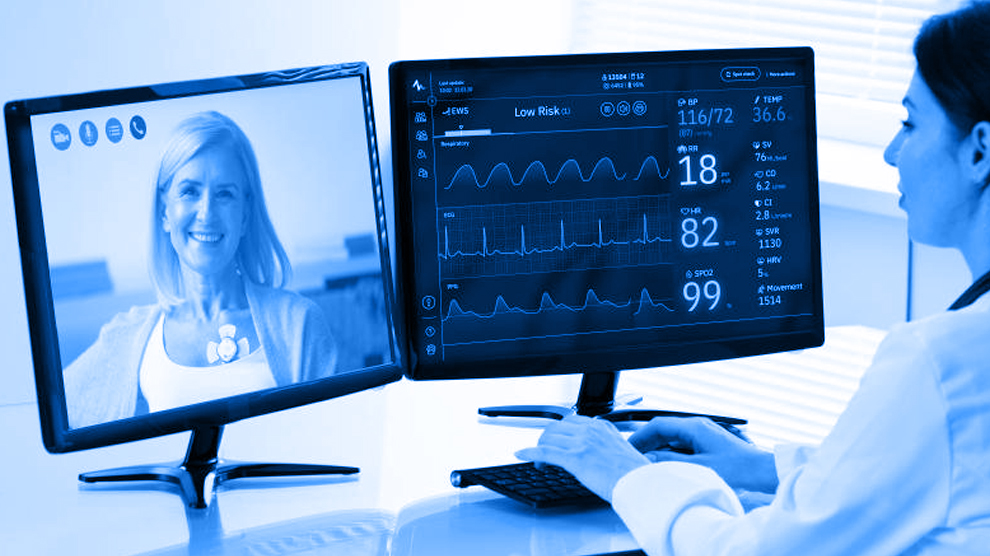
One of the most impactful shifts in home mechanical ventilation has been the widespread adoption of telemonitoring systems. Modern ventilators increasingly feature embedded wireless modules that transmit real-time data—including tidal volume, respiratory rate, leak rates, usage hours, and mask fit quality—to secure cloud-based ventilator monitoring platforms.
These systems enable clinicians to adjust ventilation settings remotely and identify problems such as unintentional leaks, inadequate usage, or nocturnal desaturation before they escalate into clinical crises.
Ong et al. (2025) demonstrated that remote transcutaneous CO₂ monitoring, when integrated into long-term ventilation services, significantly improved ventilator titration and reduced hospital readmissions (2).
Patout et al. (2019) further highlighted that technological advances in home non-invasive ventilation monitoring improved treatment adherence, particularly in patients with COPD and neuromuscular disease (6).
Telemonitoring has therefore become a central component of patient-centered ventilation strategies, enabling proactive rather than reactive care models.

Adaptive Ventilation Modes and Artificial Intelligence
Another critical advance in home ventilation is the emergence of adaptive ventilation modes that dynamically respond to a patient’s changing respiratory needs.
These intelligent systems include:
- Volume-assured pressure support modes that modulate pressure to maintain a target tidal volume
- Auto-adjusting expiratory pressure mechanisms that respond to upper airway resistance
- Spontaneous/timed (S/T) modes that provide a backup respiratory rate when spontaneous breathing becomes insufficient
Such features are particularly valuable in progressive disorders such as amyotrophic lateral sclerosis (ALS), where ventilatory requirements can change unpredictably. Yalwar and Sarkar (2025) noted that cost-effective, Bluetooth-enabled ventilator systems incorporating adaptive algorithms may expand access to intelligent ventilation technologies in resource-limited settings (3).
Artificial intelligence is also being explored in more advanced applications within HMV. Karthika et al. (2024) described AI-driven systems capable of detecting hypoventilation risk through dynamic waveform analysis, representing a promising development for patients in unsupervised or remote environments (7).
Potential AI applications include:
- Supporting personalized ventilator parameter optimization
- Predicting patient–ventilator asynchrony
- Automating abnormal pattern detection
Integration with IoT and Wearable Technologies
The concept of a ventilator as an isolated device is rapidly becoming outdated. Modern HMV systems are increasingly integrated into broader digital health ecosystems via Internet of Things (IoT) connectivity.
Integration may include:
- Bluetooth-linked pulse oximeters and capnography devices
- Smartphone-based caregiver alert systems
- Environmental sensors monitoring humidity, temperature, and CO₂ levels
- Data synchronization with electronic health records (EHRs)
- Actigraphy-based sleep monitoring
Majumder et al. (2017) described how smart home healthcare technologies enhance real-time responsiveness and continuous quality assurance, particularly for elderly populations (8).
In a national registry analysis, Czajkowska-Malinowska et al. (2022) reported that integrated alarm systems in pediatric HMV significantly improved caregiver satisfaction and patient safety, especially in high-dependency tracheostomy cases (4).
Accessibility and Low-Resource Ventilation Innovations
While advanced digital platforms dominate high-income healthcare systems, cost-effective innovations are being explored for low- and middle-income countries.
Yalwar and Sarkar (2025) reported on Bluetooth-enabled, AI-assisted ventilator designs aimed at delivering intelligent respiratory support using scalable and affordable infrastructure (3).
Such technologies may play a crucial role in closing global care gaps, particularly in regions where electricity stability, clinical infrastructure, or broadband connectivity is limited. Compatibility with solar energy systems and low-bandwidth telehealth networks is becoming an important design consideration in resilient home ventilation ecosystems.

Key Features of Modern Home Mechanical Ventilation Technologies
| Technology | Functionality | Clinical Benefit |
|---|---|---|
| Volume-assured pressure support | Adjusts pressure to maintain target tidal volume | Consistent ventilation and improved comfort |
| Auto-adjusting expiratory pressure | Responds to airway resistance changes | Reduction in obstructive events |
| Cloud-based telemonitoring | Remote access to ventilator data | Early detection and remote intervention |
| AI-driven waveform analysis | Identifies hypoventilation or asynchrony risks | Improved safety in home settings |
| IoT-integrated monitoring | Sensor + mobile connectivity | Enhanced caregiver responsiveness |
Conclusion
Home mechanical ventilation is entering a new era defined by intelligence, connectivity, portability, and patient-centered design. Advances in compact ventilator systems, remote monitoring platforms, adaptive ventilation algorithms, artificial intelligence, and IoT integration are transforming how long-term respiratory care is delivered outside hospital environments.
These technologies are not only improving safety and clinical responsiveness but are also expanding access to high-quality home-based respiratory support worldwide.
As innovation continues, the future of home mechanical ventilation will depend on balancing technological sophistication with usability, accessibility, and coordinated healthcare implementation. Smart, connected, and adaptable ventilation ecosystems are poised to define the next generation of long-term respiratory care.
References
- Fagondes, S. C., da Silva, C. L. O., Hoffmann, A., & colleagues. (2025). Home mechanical ventilation: A narrative review and a proposal of practical approach. Brazilian Journal of Pulmonology. https://doi.org/10.1016/j.jornaldepneumologia.2024.11.003
- Ong, W. H., Ireland, P., Ho, C. K., & colleagues. (2025). Transcutaneous CO₂ measurement in an adult long-term ventilation (LTV) service. Journal of Clinical Medicine, 14(12), 4137. https://doi.org/10.3390/jcm14124137
- Yalwar, A., & Sarkar, G. C. (2025). Cost-effective Bluetooth technology-based emergency medical ventilator for respiratory support: A review. SSRN Electronic Journal. https://doi.org/10.2139/ssrn.5289358
- Czajkowska-Malinowska, M., Bartolik, K., et al. (2022). Development of home mechanical ventilation in Poland: 2009–2019. Journal of Clinical Medicine, 11(8), 2098. https://doi.org/10.3390/jcm11082098
- Crimi, C., Pierucci, P., Carlucci, A., & Cortegiani, A. (2019). Long-term ventilation in neuromuscular patients: Review of concerns and telemonitoring options. Respiration, 97(3), 185–197. https://doi.org/10.1159/000495941
- Patout, M., Palot, A., & Borel, J. C. (2019). Technological advances in home non-invasive ventilation monitoring. Respirology, 24(10), 996–1003. https://doi.org/10.1111/resp.13497
- Karthika, M., Sreedharan, J. K., Shevade, M., & colleagues. (2024). Artificial intelligence in respiratory care. Frontiers in Digital Health, 4, Article 1502434. https://doi.org/10.3389/fdgth.2024.1502434
- Majumder, S., Noferesti, M., & Aghayi, E. (2017). Smart homes for elderly healthcare. Sensors, 17(11), 2496. https://doi.org/10.3390/s17112496