

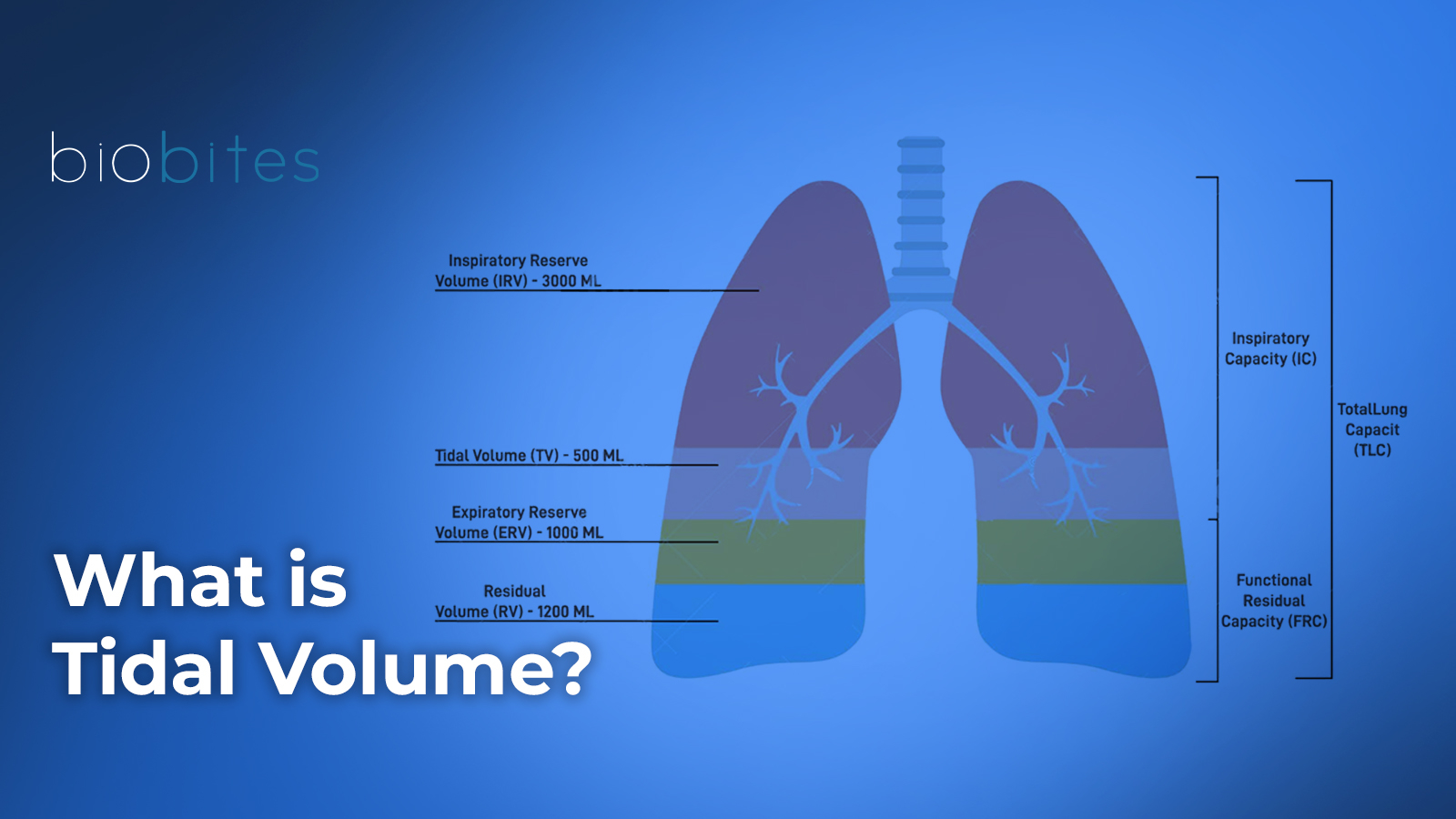
Tidal volume (TV) is the volume of air that enters or leaves the lungs during a normal breath. It is defined for passive breathing at rest and is an adjustable parameter in mechanical ventilation.
Tidal volume is usually expressed in ml/kg of body weight. In healthy adults, it is approximately 6–8 ml/kg. Both excessively high and excessively low tidal volumes can cause lung injury. Very low tidal volume may lead to hypoventilation.
Tidal Volume in Mechanical Ventilation
In mechanical ventilation, tidal volume is the amount of air delivered to the patient by the ventilator with each breath. It is one of the fundamental setting parameters of mechanical ventilation.
Tidal volume is adjusted according to ideal body weight (IBW), not actual body weight. An appropriate tidal volume ensures adequate alveolar ventilation while minimizing the risk of lung injury.
Why Tidal Volume Matters for Lung Protection
Tidal volume directly determines the mechanical load applied to lung tissue.
High tidal volume causes excessive alveolar stretching, which leads to volutrauma. Overdistension disrupts the alveolar–capillary barrier and contributes to ventilator-induced lung injury (VILI).
Low tidal volume ventilation reduces alveolar overdistension and plays a central role in lung-protective ventilation strategies, particularly in patients with ARDS.
Typical Tidal Volume Ranges
Tidal volume is generally set according to body weight (ml/kg):
- Healthy adults (spontaneous breathing): 6–8 ml/kg
- Standard mechanical ventilation: 6–8 ml/kg
- Lung-protective ventilation: 4–6 ml/kg
Lower tidal volume strategies are especially recommended in acute respiratory distress syndrome (ARDS).
Common Clinical Mistakes in Tidal Volume Settings
Setting tidal volume incorrectly is a frequent clinical error in mechanical ventilation.
- Setting tidal volume too high leads to excessive alveolar stretching.
- The risk of volutrauma and ventilator-induced lung injury increases.
- High tidal volume is associated with increased mortality, especially in ARDS.
- Using actual body weight instead of ideal body weight results in unnecessarily high tidal volume delivery.
- Setting tidal volume too low may cause hypoventilation and hypercapnia.
Correct tidal volume adjustment is essential for safe and effective ventilator management.
Frequently Asked Questions About Tidal Volume
1. Why is tidal volume adjusted according to ideal body weight?
Lung size correlates with height, not actual body weight. Actual body weight does not reflect lung capacity. Therefore, ideal body weight is used to avoid excessive tidal volume delivery.
2. Is low tidal volume ventilation safe for every patient?
No. Very low tidal volume may cause hypoventilation, hypercapnia, and respiratory acidosis if not carefully monitored.
3. What is the most important risk of high tidal volume?
Excessive alveolar stretching leading to volutrauma and ventilator-induced lung injury.
References
- West, J. B. Respiratory Physiology: The Essentials. 10th ed. Wolters Kluwer, 2016.
- Tobin, M. J. Principles and Practice of Mechanical Ventilation. 3rd ed. McGraw-Hill, 2013.
- Guyton, A. C., Hall, J. E. Textbook of Medical Physiology. 13th ed. Elsevier, 2016.
- Slutsky, A. S., Ranieri, V. M. Ventilator-induced lung injury. New England Journal of Medicine, 2013.
- ARDS Network. Ventilation with lower tidal volumes. New England Journal of Medicine, 2000.
- Fan, E., et al. Ventilator management in acute respiratory distress syndrome. JAMA, 2018.