

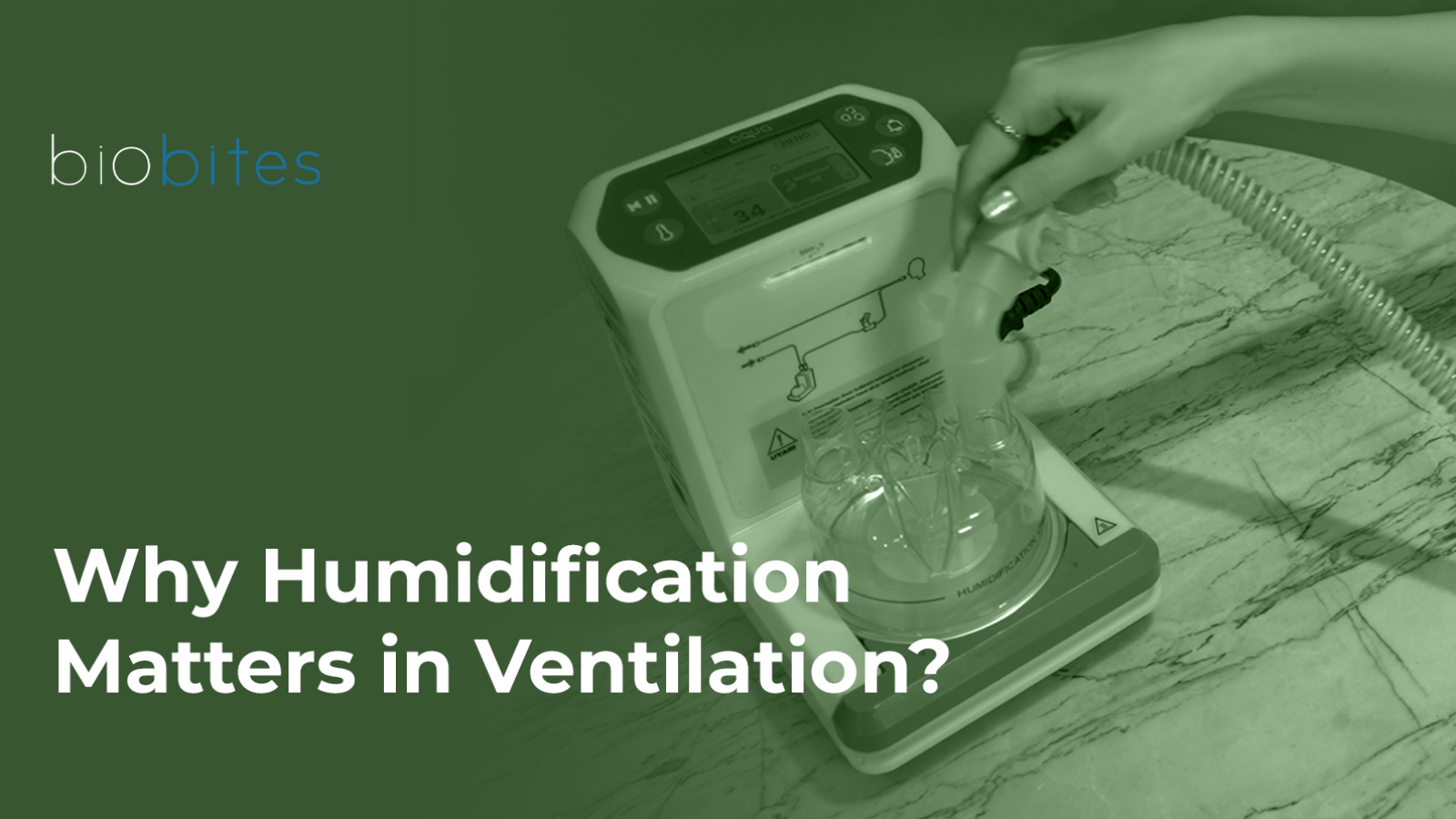
During mechanical ventilation, humidification of inspired air is essential because the upper airways are bypassed and natural conditioning of air cannot occur. When adequate humidification is not provided, dry medical gas causes damage to the airway mucosa and impairs mucociliary clearance. As a result, secretions become thickened, airway resistance increases, and the risk of tube obstruction rises. In long-term ventilation, insufficient humidification increases the risk of atelectasis and infection, thereby negatively affecting oxygenation. Therefore, appropriate humidification is a fundamental and indispensable component of mechanical ventilation.
Effects of Long-Term Dry Gas Exposure on the Airways
Prolonged inhalation of dry gas leads to dryness of the airway mucosa and disruption of epithelial integrity. Mucociliary clearance decreases, causing secretions to become thick and sticky. As airway resistance increases, the risk of endotracheal tube obstruction and atelectasis rises. In addition, impaired clearance increases the risk of infection and negatively affects gas exchange, ultimately reducing ventilation effectiveness.
Active vs Passive Humidification During Mechanical Ventilation
When comparing active vs passive humidification in mechanical ventilation, the main difference lies in the level of humidity control and suitability for long-term ventilation. The choice of system directly affects secretion management, airway resistance, and patient comfort.
Active Humidification Systems
Active humidification delivers moisture to inspired gas using an external heater and heated water chamber. It provides higher and precisely controlled humidity levels, making it particularly effective in long-term and invasive mechanical ventilation. This helps maintain mucociliary function and prevents secretion thickening.
Passive Humidification and HME Filters
Passive humidification recovers heat and moisture from the patient’s exhaled gas using heat and moisture exchangers (HMEs). These systems are easy to set up and practical for short-term or non-invasive ventilation. However, they may be insufficient in patients with copious or thick secretions, as filter obstruction can increase airway resistance.
Humidification in ICU and Home Ventilation Settings
Humidification is vital in ICU ventilation, where invasive and long-term mechanical ventilation is common and upper airway function is completely bypassed. For this reason, active humidification is usually preferred to control secretions and prevent airway injury. In home ventilation, patient comfort is prioritized. Non-invasive ventilation is more frequently used. In such cases, passive humidification is generally sufficient. Active humidification may be required for tracheostomized patients at home. The choice of humidification method depends on ventilation duration and the patient’s clinical condition.
Common Clinical Challenges of Humidification During Ventilation
Various clinical problems may occur in humidification practices during ventilation. Inadequate humidification leads to airway dryness. Secretions become thick and difficult to clear. Endotracheal tube obstruction may develop. Mucociliary clearance is impaired. The risk of infection increases. Excessive humidification causes condensation within the ventilator circuit. Accumulated water may increase the risk of aspiration. HME filters can become obstructed by secretions. This increases airway resistance. Incorrect selection of humidification methods reduces ventilation efficiency.
Frequently Asked Questions
1. Why is humidification necessary during mechanical ventilation?
Mechanical ventilation bypasses the upper airways. Inspired gas remains dry. This leads to mucosal damage and thick secretions. Humidification protects the airways.
2. Is active or passive humidification more effective?
Active humidification is more effective in long-term and invasive ventilation. It provides higher and more controlled humidity. Passive humidification is generally sufficient for short-term or non-invasive ventilation.
3. What complications result from inadequate humidification?
Secretions become thickened. Endotracheal tube obstruction may occur. The risk of atelectasis and infection increases. Ventilation efficiency decreases.
References
- Branson RD. Humidification for patients with artificial airways. Respiratory Care, 1999.
- Restrepo RD et al. AARC Clinical Practice Guideline: Humidification during invasive and noninvasive mechanical ventilation. Respiratory Care, 2012.
- Hess DR. Humidification during mechanical ventilation. Respiratory Care, 2007.
- Tobin MJ. Principles and Practice of Mechanical Ventilation. McGraw-Hill, 2013.
- Wilkins RL, Stoller JK, Scanlan CL. Egan’s Fundamentals of Respiratory Care. Elsevier.