Non-Invasive Mechanical Ventilation

Non-Invasive Mechanical Ventilation (NIV): Physiological Principles and Clinical Indications

Non-Invasive Mechanical Ventilation (NIV) plays a central role in modern respiratory support strategies. By delivering positive airway pressure without the need for endotracheal intubation, NIV enhances gas exchange, decreases the work of breathing, and helps prevent complications associated with invasive mechanical ventilation. Ongoing advances in ventilator technology, interface development, and clinical practice have broadened its application across a wide spectrum of acute and chronic respiratory disorders. Today, NIV is recommended in international clinical guidelines for selected forms of respiratory failure, particularly hypercapnic respiratory failure and acute cardiogenic pulmonary edema.

What Is Non-Invasive Mechanical Ventilation (NIV)?

Non-invasive mechanical ventilation (NIV) has become an integral component of contemporary respiratory care, offering ventilatory support without the need for an artificial airway. By delivering positive pressure ventilation through an external interface, NIV aims to improve gas exchange, reduce the work of breathing, and alleviate respiratory distress while avoiding complications associated with invasive mechanical ventilation, such as ventilator-associated pneumonia, airway trauma, and the need for sedation (1–3). Over the past several decades, advances in ventilator technology, interface design, and clinical understanding have expanded the role of NIV across a broad range of acute and chronic respiratory conditions (1,3).

The clinical adoption of NIV has been driven by a growing body of evidence demonstrating its effectiveness in selected patient populations, particularly in the management of acute exacerbations of chronic obstructive pulmonary disease (COPD) and cardiogenic pulmonary edema (4,7). In these settings, NIV has been associated with reduced rates of endotracheal intubation, shorter hospital stays, and improved patient tolerance compared with conventional invasive ventilation strategies (4–7). As a result, NIV is now recommended by multiple international guidelines as a first-line ventilatory intervention in specific clinical scenarios (6,8). Nevertheless, the success of NIV is highly dependent on appropriate patient selection, timely initiation, and the performance characteristics of the ventilatory device and interface used (6).

From a technological perspective, NIV presents unique challenges that distinguish it from invasive mechanical ventilation. The presence of intentional and unintentional leaks, variability in patient respiratory effort, and the need for patient–ventilator synchrony require ventilators specifically designed or adapted for non-invasive application (9–11). Over time, manufacturers have developed dedicated NIV ventilators as well as advanced non-invasive modes within intensive care unit (ICU) ventilators, incorporating features such as leak compensation algorithms, sensitive triggering mechanisms, and adaptive pressure support (9,10). These technological developments have played a critical role in improving the feasibility and tolerability of NIV in both acute care and long-term settings (10).

In parallel with ventilator evolution, the development of patient interfaces has significantly influenced NIV outcomes. A wide range of interfaces—including nasal masks, oronasal masks, full-face masks, and helmet systems—are now available, each with distinct advantages and limitations related to comfort, seal integrity, dead space, and risk of pressure-related skin injury (12–14). Interface selection is a key determinant of NIV success and remains an area of active clinical and engineering interest (12,13). The increasing diversity of interfaces reflects the need to tailor NIV delivery to individual patient anatomy, clinical condition, and tolerance (14).

Despite its widespread use, NIV is not universally appropriate and may be associated with treatment failure if applied outside well-defined indications or in the presence of contraindications such as impaired airway protection, severe hemodynamic instability, or altered mental status (5,6). Delayed recognition of NIV failure and postponement of invasive ventilation can adversely affect patient outcomes (5,15). Consequently, clinicians must balance the potential benefits of NIV against its limitations, guided by clinical assessment, physiological monitoring, and an understanding of device performance (6). For regulators and biomedical engineers, these considerations underscore the importance of safety features, alarm systems, and standardized performance requirements in NIV-capable ventilators (9,10).

The expanding role of NIV beyond the ICU into emergency departments, general wards, and home care environments has further increased the relevance of device design and usability (10,13). Portable ventilators, home NIV systems, and hybrid devices intended for both acute and chronic use have introduced new considerations related to reliability, monitoring capabilities, and regulatory oversight (10,13). In this context, a clear understanding of the clinical indications for NIV and the technologies that support its delivery is essential for informed clinical practice, device development, and regulatory evaluation.

The objective of this narrative review is to describe the clinical use of non-invasive mechanical ventilation, with a particular focus on its established and emerging indications and the ventilator technologies that enable its application. Rather than providing a systematic evaluation of clinical outcomes, this review synthesizes key concepts from the existing literature to offer a descriptive overview of NIV physiology and clinical indications relevant to modern practice. By integrating clinical and engineering perspectives, this review aims to support clinicians, biomedical engineers, and regulatory professionals in understanding the current landscape of non-invasive mechanical ventilation.

Physiological Principles of Non-Invasive Mechanical Ventilation

Non-invasive mechanical ventilation (NIV) supports the respiratory system by delivering positive airway pressure through an external interface, thereby assisting or replacing spontaneous breathing without the placement of an endotracheal tube. The primary physiological objectives of NIV are to improve alveolar ventilation, enhance gas exchange, reduce the work of breathing, and alleviate respiratory muscle fatigue (1,3). These effects are achieved through the application of positive pressure during inspiration, expiration, or both, depending on the ventilation mode used.

Effects on Respiratory Mechanics and Gas Exchange

In patients with acute or chronic respiratory failure, increased airway resistance, reduced lung compliance, or respiratory muscle dysfunction may lead to hypoventilation and gas exchange abnormalities. By providing inspiratory pressure support, NIV augments tidal volume and minute ventilation, leading to a reduction in arterial carbon dioxide tension (PaCO₂) and improvement in respiratory acidosis, particularly in hypercapnic respiratory failure such as acute exacerbations of COPD (4,6). The unloading of inspiratory muscles reduces diaphragmatic effort and oxygen consumption, which contributes to improved respiratory efficiency and patient comfort (1,3).

The application of positive end-expiratory pressure (PEEP), either alone as continuous positive airway pressure (CPAP) or in combination with inspiratory pressure support, increases functional residual capacity and prevents alveolar collapse at end expiration (2,7). This mechanism is particularly relevant in conditions characterized by alveolar flooding or atelectasis, such as cardiogenic pulmonary edema, where PEEP improves oxygenation by enhancing ventilation–perfusion matching and reducing intrapulmonary shunt (7).

Cardiovascular Effects of NIV

The application of positive airway pressure during NIV can have significant cardiovascular effects. By increasing intrathoracic pressure, NIV reduces venous return and left ventricular preload while simultaneously decreasing left ventricular afterload (2,7). These mechanisms are particularly beneficial in acute cardiogenic pulmonary edema, where NIV improves cardiac performance and pulmonary congestion while enhancing oxygenation (7).

However, in patients with hypovolemia or hemodynamic instability, excessive airway pressures may adversely affect cardiac output. Understanding these physiological interactions is essential for safe NIV application and informs ventilator pressure limits, alarm thresholds, and monitoring requirements from both clinical and regulatory perspectives (6,9).

Determinants of NIV Success and Failure

The physiological response to NIV is influenced by multiple factors, including disease severity, respiratory drive, interface tolerance, and ventilator performance. Early improvements in respiratory rate, gas exchange, and patient comfort are generally associated with NIV success, whereas persistent tachypnea, worsening gas exchange, or increased work of breathing may signal impending failure (5,15). From a physiological standpoint, failure to adequately unload respiratory muscles or correct gas exchange abnormalities may necessitate escalation to invasive mechanical ventilation.

These considerations highlight the importance of continuous physiological monitoring during NIV and reinforce the need for ventilators equipped with reliable monitoring systems, alarms, and safety features. For biomedical engineers and regulators, an understanding of these physiological principles is essential when evaluating device performance, usability, and clinical risk.

Figure 1. Physiological principles of non-invasive mechanical ventilation (NIV).
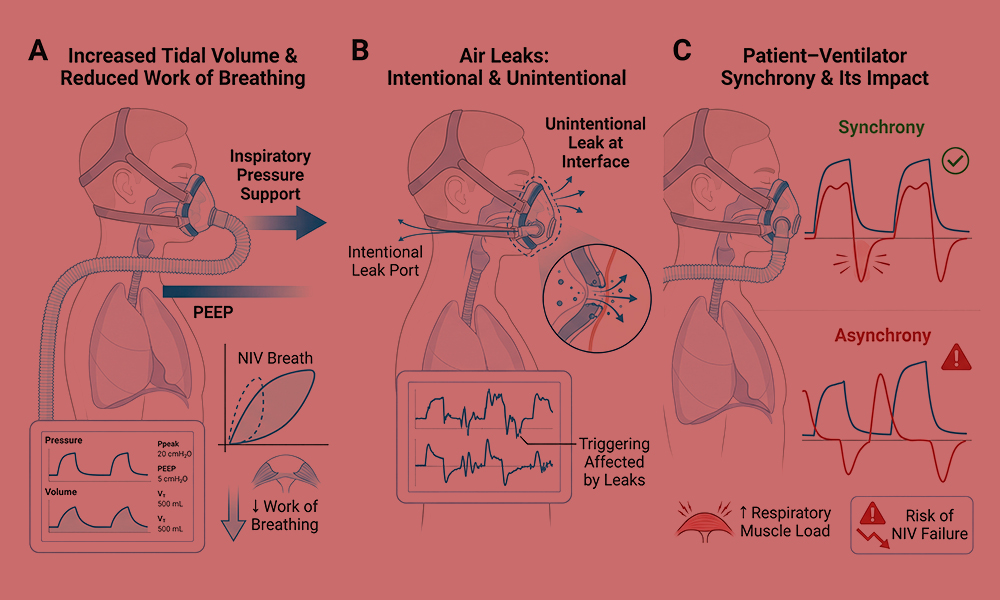
(A) Application of inspiratory pressure support and positive end-expiratory pressure (PEEP) during NIV augments tidal volume and reduces the work of breathing compared with spontaneous breathing. (B) Air leaks are inherent to NIV and may occur intentionally through leak ports or unintentionally at the interface–skin junction, influencing effective pressure delivery and ventilator triggering. (C) Patient–ventilator synchrony depends on accurate detection of patient inspiratory effort and appropriate cycling of ventilator support; poor synchrony may increase respiratory muscle load and contribute to NIV failure.

Physiological goalUnderlying mechanismVentilator feature or technologyClinical relevance
Reduce work of breathingInspiratory muscle unloadingPressure support ventilationDecreases respiratory muscle fatigue
Improve alveolar ventilationIncreased tidal volumeAdjustable inspiratory pressureReduces hypercapnia
Prevent alveolar collapseIncreased functional residual capacityPositive end-expiratory pressure (PEEP)Improves oxygenation
Improve patient–ventilator synchronyAccurate detection of patient effortFlow or pressure triggering algorithmsEnhances comfort and tolerance
Compensate for air leaksMaintenance of target pressureLeak compensation algorithmsPrevents loss of ventilatory support
Minimize CO₂ rebreathingEffective washout of exhaled gasIntentional leak ports or exhalation valvesMaintains ventilation efficiency
Adapt to variable respiratory demandDynamic adjustment of supportAdaptive or volume-assured pressure modesImproves stability across conditions
Enhance patient comfortReduced interface pressure and noiseInterface design and humidificationIncreases NIV adherence
Ensure patient safetyDetection of abnormal conditionsAlarms and monitoring systemsReduces risk of adverse events
Table 1. Physiological goals of non-invasive mechanical ventilation and corresponding ventilator features

Clinical Indications for Non-Invasive Mechanical Ventilation

Non-invasive mechanical ventilation is indicated in selected clinical conditions characterized by acute or chronic respiratory failure, where ventilatory support can be provided safely and effectively without the need for endotracheal intubation. The appropriateness of NIV depends on the underlying pathophysiology, severity of respiratory failure, patient cooperation, and the absence of contraindications such as impaired airway protection or severe hemodynamic instability (1,6). When applied within established indications, NIV may reduce the need for invasive mechanical ventilation and its associated complications (1,4).

Acute Exacerbation of COPD (AECOPD)

Acute exacerbation of chronic obstructive pulmonary disease (AECOPD) represents the most well-established and evidence-supported indication for NIV. Exacerbations are frequently associated with increased airway resistance, dynamic hyperinflation, respiratory muscle fatigue, and hypercapnic respiratory acidosis. NIV improves alveolar ventilation by augmenting tidal volume and reducing inspiratory muscle load, leading to rapid reductions in arterial carbon dioxide tension and correction of acidosis (3,4).

Multiple randomized controlled trials and systematic reviews have demonstrated that NIV in AECOPD reduces rates of endotracheal intubation, hospital mortality, and length of hospital stay compared with standard medical therapy alone (4,16,17). The early application of NIV, including use outside the intensive care unit in appropriately selected patients, has also been shown to improve clinical outcomes (17). Consequently, international clinical practice guidelines recommend NIV as first-line ventilatory support in patients with AECOPD presenting with moderate to severe respiratory acidosis and increased work of breathing, provided no contraindications are present (6,8).

Acute Cardiogenic Pulmonary Edema

NIV is strongly indicated in acute cardiogenic pulmonary edema, where respiratory failure results primarily from alveolar flooding and reduced lung compliance rather than ventilatory pump failure. The application of continuous positive airway pressure (CPAP) or bilevel NIV increases functional residual capacity, improves oxygenation, and reduces both left ventricular preload and afterload through increased intrathoracic pressure (2,7).

Randomized trials and meta-analyses have demonstrated that NIV leads to rapid improvement in respiratory distress and gas exchange and reduces the need for endotracheal intubation compared with conventional oxygen therapy (7,18). Both CPAP and bilevel NIV are considered acceptable modalities, with device selection often guided by clinical severity, hemodynamic status, and local expertise (6,18).

Hypoxemic Acute Respiratory Failure

The use of NIV in hypoxemic acute respiratory failure, including pneumonia and early acute respiratory distress syndrome (ARDS), remains controversial. In these conditions, severe ventilation–perfusion mismatch, reduced lung compliance, and high inspiratory demand may limit the effectiveness of NIV and increase the risk of treatment failure (6,15).

Early studies suggested potential benefits of NIV in carefully selected patients with hypoxemic respiratory failure, particularly in terms of avoiding intubation (19). However, subsequent evidence has highlighted high failure rates and worse outcomes when intubation is delayed in patients who do not respond promptly to NIV (15). As a result, current guidelines recommend cautious use of NIV in this population, with close monitoring and a low threshold for escalation to invasive ventilation (6). The emergence of alternative non-invasive oxygenation strategies, such as high-flow nasal oxygen, has further refined patient selection in hypoxemic respiratory failure (20).

Post-Extubation Respiratory Failure and Weaning

NIV has been studied both as a preventive strategy following planned extubation and as a treatment for established post-extubation respiratory failure. Prophylactic application of NIV in selected high-risk patients—such as those with underlying COPD or chronic hypercapnia—has been shown to reduce the incidence of respiratory failure and the need for reintubation (21).

In contrast, the use of NIV as a rescue therapy once post-extubation respiratory failure is established has been associated with increased mortality in some studies, likely due to delayed reintubation (5). Current guidelines therefore recommend selective use of NIV in this setting and emphasize careful patient selection and close clinical monitoring (6).

Neuromuscular Diseases and Chest Wall Disorders

Neuromuscular diseases and chest wall disorders are characterized by chronic ventilatory failure due to respiratory muscle weakness and reduced thoracic compliance. NIV is widely used in both acute decompensations and long-term management to improve alveolar ventilation, alleviate symptoms of hypoventilation, and reduce the burden on respiratory muscles (1,3).

Long-term NIV has been shown to improve gas exchange, sleep quality, and survival in selected neuromuscular conditions, including amyotrophic lateral sclerosis (22,23). Device features such as sensitive triggering, volume-assured pressure support, and comfortable interfaces are particularly important in this population, where long-term adherence is essential (10,22).

Obesity Hypoventilation Syndrome

Obesity hypoventilation syndrome (OHS) is characterized by chronic hypercapnic respiratory failure resulting from obesity-related reductions in respiratory system compliance and ventilatory drive. NIV is indicated in patients with OHS who exhibit persistent daytime hypercapnia, particularly when CPAP therapy alone is insufficient (6,24).

NIV improves ventilation by augmenting tidal volume and reducing respiratory muscle workload, leading to sustained improvements in gas exchange and sleep-related breathing disturbances. Long-term NIV has also been associated with improved quality of life and reduced healthcare utilization in this population (24). Ventilator adaptability and effective leak compensation are key technical considerations in patients with OHS (10).

Palliative and End-of-Life Use of NIV

NIV may be used as a supportive or palliative intervention in patients with advanced respiratory disease who decline invasive mechanical ventilation or for whom intubation is not appropriate. In this context, the primary goals are relief of dyspnea and improvement of comfort rather than correction of physiological abnormalities (1,25).

Studies have shown that NIV can reduce dyspnea and respiratory distress in selected end-of-life patients, although careful attention must be paid to patient tolerance, goals of care, and ethical considerations (25). Device usability, interface comfort, and noise reduction are particularly relevant when NIV is applied in palliative settings or outside the ICU environment (13,25).

References

  1. Nava S, Hill N. Non-invasive ventilation in acute respiratory failure. Lancet. 2009;374(9685):250–9.
  2. Brochard L, Slutsky A, Pesenti A. Mechanical ventilation to minimize progression of lung injury in acute respiratory failure. Am J Respir Crit Care Med. 2017;195(4):438–42.
  3. Mehta S, Hill NS. Noninvasive ventilation. Am J Respir Crit Care Med. 2001;163(2):540–77.
  4. Brochard L, Mancebo J, Wysocki M, et al. Noninvasive ventilation for acute exacerbations of chronic obstructive pulmonary disease. N Engl J Med. 1995;333(13):817–22.
  5. Esteban A, Frutos-Vivar F, Ferguson ND, et al. Noninvasive positive-pressure ventilation for respiratory failure after extubation. N Engl J Med. 2004;350(24):2452–60.
  6. Rochwerg B, Brochard L, Elliott MW, et al. Official ERS/ATS clinical practice guidelines: noninvasive ventilation for acute respiratory failure. Eur Respir J. 2017;50(2):1602426.
  7. Vital FM, Ladeira MT, Atallah ÁN. Non-invasive positive pressure ventilation for acute cardiogenic pulmonary edema. Cochrane Database Syst Rev. 2013;(5):CD005351.
  8. British Thoracic Society Standards of Care Committee. Non-invasive ventilation in acute respiratory failure. Thorax. 2002;57(3):192–211.
  9. Vignaux L, Tassaux D, Jolliet P. Performance of noninvasive ventilation algorithms. Intensive Care Med. 2007;33(12):2053–60.
  10. Carlucci A, Richard JC, Wysocki M, et al. Noninvasive versus conventional mechanical ventilation. Am J Respir Crit Care Med. 2001;163(4):874–80.
  11. Thille AW, Rodriguez P, Cabello B, et al. Patient–ventilator asynchrony during noninvasive ventilation. Intensive Care Med. 2006;32(10):1515–22.
  12. Girault C, Briel A, Hellot MF, et al. Interface strategy during noninvasive positive pressure ventilation. Intensive Care Med. 2009;35(2):259–65.
  13. Crimi C, Noto A, Princi P, et al. A European survey of noninvasive ventilation practices. Eur Respir J. 2010;36(2):362–9.
  14. Antonelli M, Conti G, Pelosi P, et al. New treatment of acute hypoxemic respiratory failure: helmet NIV. Intensive Care Med. 2002;28(12):1701–7.
  15. Carrillo A, Gonzalez-Diaz G, Ferrer M, et al. Non-invasive ventilation in community-acquired pneumonia and severe acute respiratory failure. Intensive Care Med. 2012;38(3):458–66.
  16. Lightowler JV, Wedzicha JA, Elliott MW, Ram FSF. Non-invasive positive pressure ventilation to treat respiratory failure resulting from exacerbations of chronic obstructive pulmonary disease. Cochrane Database Syst Rev. 2003;(1):CD004104.
  17. Plant PK, Owen JL, Elliott MW. Early use of non-invasive ventilation for acute exacerbations of chronic obstructive pulmonary disease on general respiratory wards. Lancet. 2000;355(9219):1931–1935.
  18. Gray A, Goodacre S, Newby DE, et al. Noninvasive ventilation in acute cardiogenic pulmonary edema. N Engl J Med. 2008;359(2):142–151.
  19. Antonelli M, Conti G, Rocco M, et al. A comparison of noninvasive positive-pressure ventilation and conventional mechanical ventilation in patients with acute hypoxemic respiratory failure. N Engl J Med. 1998;339(7):429–435.
  20. Frat JP, Thille AW, Mercat A, et al. High-flow oxygen through nasal cannula in acute hypoxemic respiratory failure. N Engl J Med. 2015;372(23):2185–2196.
    (Useful comparator — reviewers like this)
  21. Ferrer M, Valencia M, Nicolas JM, et al. Early noninvasive ventilation averts extubation failure in patients at risk. Am J Respir Crit Care Med. 2006;173(2):164–170.
  22. Simonds AK. Home ventilation. Eur Respir J. 2003;22(47 Suppl):38s–46s.
  23. Bourke SC, Gibson GJ. Noninvasive ventilation in ALS. Lancet Neurol. 2004;3(10):607–615.
  24. Masa JF, Pépin JL, Borel JC, et al. Obesity hypoventilation syndrome. Eur Respir Rev. 2019;28(151):180097.
  25. Nava S, Ferrer M, Esquinas A, et al. Palliative use of non-invasive ventilation in end-of-life patients. Intensive Care Med. 2013;39(10):1876–1885.
Blog_Cover_1 (1)

Invasive and Non-Invasive Ventilation: Neonatal Respiratory Support

Neonatal respiratory failure remains a primary cause of admission to neonatal intensive care units (NICUs) worldwide. Premature birth, affecting an estimated 15 million neonates annually globally, is strongly correlated with pulmonary immaturity and an elevated risk of respiratory complications (1). In such cases, respiratory support is frequently indispensable for reducing morbidity and improving survival outcomes.

Common causes of neonatal respiratory insufficiency include respiratory distress syndrome (RDS), transient tachypnea of the newborn (TTN), pneumonia, and apnea of prematurity. Without timely intervention, these conditions can lead to rapid clinical deterioration and significant long-term sequelae, such as bronchopulmonary dysplasia (BPD), intraventricular hemorrhage (IVH), or mortality.

The physiological immaturity of the neonatal lung significantly contributes to the high incidence of respiratory complications in preterm and term neonates with perinatal distress. In premature infants, incomplete alveolarization and insufficient surfactant production often lead to alveolar collapse.

These factors, coupled with a compliant chest wall, underdeveloped respiratory musculature, and increased oxygen demands, create a scenario where neonates are prone to atelectasis, hypoventilation, and respiratory failure (2). Consequently, mechanical or non-invasive ventilatory support is frequently initiated shortly after birth to stabilize gas exchange and reduce the work of breathing.

Over the past few decades, the field of neonatal respiratory support has evolved dramatically. Mechanical ventilation, once the cornerstone of neonatal respiratory care, has increasingly been supplanted by lung-protective strategies designed to minimize the risks of ventilator-induced lung injury (VILI).

Innovations such as volume-targeted ventilation (VTV), high-frequency oscillatory ventilation (HFOV), and neurally adjusted ventilatory assist (NAVA) have significantly improved synchronization and pressure control. Parallel advances in monitoring technology, including electrical impedance tomography (EIT) and artificial intelligence (AI)-based ventilator analytics, now offer real-time, individualized feedback for optimized care (3).

This review aims to provide a comprehensive overview of current strategies and innovations in neonatal respiratory support. It covers the physiological basis for respiratory assistance in neonates, details conventional and emerging ventilatory approaches, and explores the implications of novel technologies.

Additionally, it discusses the persistent challenges encountered in low-resource settings and outlines future directions for research and clinical practice. Through this review, we seek to inform clinicians, researchers, and policymakers about the current state and future potential of neonatal respiratory care worldwide.

Physiology and Pathophysiology in Neonatal Respiratory

The transition from intrauterine to extrauterine life presents substantial respiratory challenges for neonates, particularly those born prematurely. In utero, gas exchange occurs via the placenta, with the fetal lungs remaining fluid-filled and relatively inactive.

At birth, this abruptly changes, necessitating rapid clearance of lung fluid, the onset of spontaneous breathing, and functional pulmonary circulation. The success of this transition is highly dependent on lung maturity, surfactant availability, and coordinated cardiorespiratory function.

Lung development progresses through several distinct stages: embryonic, pseudoglandular, canalicular, saccular, and alveolar. Alveolarization—the formation of functional gas-exchange units—begins around 36 weeks of gestation and continues postnatally.

In preterm infants, especially those born before 32 weeks, alveolar and capillary networks are insufficiently developed to support efficient gas exchange (2). This underdevelopment contributes to poor lung compliance, increased airway resistance, and ineffective ventilation.

One of the most critical deficits in preterm lung function is the lack of surfactant, a lipoprotein complex that reduces surface tension and prevents alveolar collapse. Surfactant deficiency leads to decreased lung compliance, atelectasis, and impaired oxygenation—the hallmark features of Respiratory Distress Syndrome (RDS).

Additionally, the neonatal chest wall is highly compliant, offering little resistance to inward recoil, and the diaphragm is relatively underpowered, further limiting ventilation efficiency.

Several pathophysiological conditions arise from these anatomical and functional limitations. Transient Tachypnea of the Newborn (TTN) is common in term and near-term infants and is caused by delayed absorption of fetal lung fluid.

In contrast, apnea of prematurity results from the immaturity of brainstem respiratory centers, leading to episodic cessation of breathing. While the underlying mechanisms differ for these conditions, both may necessitate some form of respiratory assistance, whether invasive or non-invasive.

In addition to pulmonary immaturity, hemodynamic and systemic challenges—such as persistent pulmonary hypertension of the newborn (PPHN), patent ductus arteriosus (PDA), or sepsis—can compound respiratory compromise. Hypoxemia and acidosis further increase pulmonary vascular resistance, worsening oxygenation and potentially causing right-to-left shunting.

Collectively, these factors explain why many neonates, especially those born prematurely or with perinatal complications, require respiratory support. Understanding the unique physiology and vulnerabilities of the neonatal lung is essential for selecting the appropriate support strategy and optimizing outcomes.

ConditionGestational Age AffectedPathophysiologyClinical FeaturesCXR FindingsInitial ManagementNeed for Respiratory Support
Respiratory Distress Syndrome (RDS)<32 weeks (mostly preterm)Surfactant deficiency → alveolar collapse → poor gas exchangeTachypnea, grunting, nasal flaring, cyanosisGround-glass opacities, air bronchogramsSurfactant, CPAP or MV, oxygenHigh – often needs MV and surfactant
Transient Tachypnea of the Newborn (TTN)Term or near-termDelayed lung fluid clearance → mild pulmonary edemaTachypnea shortly after birth, no distress signsProminent vascular markings, fluid in fissuresObservation, oxygen if neededLow – usually resolves within 48–72 hrs
Apnea of Prematurity<34 weeksImmature central respiratory control → intermittent apneaEpisodes of apnea with bradycardia/desaturationOften normalCaffeine, CPAP in moderate/severe casesVariable – often needs nasal CPAP
Meconium Aspiration Syndrome (MAS)Term or post-termAirway obstruction + inflammation → V/Q mismatch, hypoxemiaRespiratory distress, barrel chest, coarse cracklesPatchy infiltrates, hyperinflationOxygen, CPAP or MV, sometimes surfactantModerate – depends on severity
Persistent Pulmonary Hypertension (PPHN)Term, near-termFailure of normal pulmonary vasodilation → right-to-left shuntingCyanosis unresponsive to O₂, loud second heart soundNormal or variableOxygen, iNO, MV, sedationHigh – may require HFOV or ECMO
Bronchopulmonary Dysplasia (BPD)Very preterm, typically evolvingChronic lung injury from prolonged O₂/MV exposureOngoing oxygen need >28 days, wheezing, poor growthHyperinflation, fibrosis, cystic changesDiuretics, bronchodilators, O₂Chronic support — often home O₂ or ventilation
Notes: CXR = Chest X-Ray: MV = Mechanical Ventilation: CPAP = Continuous Positive Airway Pressure: iNO = Inhaled Nitric Oxide: O₂ = Supplemental Oxygen

Invasive Ventilatory Support

Invasive mechanical ventilation (IMV) is a critical intervention for neonates with life-threatening respiratory failure, often due to surfactant deficiency, structural lung immaturity, or systemic complications such as sepsis or persistent pulmonary hypertension.

While IMV can be life-saving, it is associated with significant risks, necessitating careful selection of ventilatory modes, parameters, and weaning strategies to optimize outcomes and reduce harm (4, 5).

Invasive Ventilation Modes and Strategies

Several ventilatory modes are used in neonatal intensive care units (NICUs), each tailored to specific clinical needs:

  • Assist-Control Ventilation (A/C): Delivers preset breaths, which can be initiated by the neonate or the ventilator. While maintaining adequate minute ventilation, this mode carries an increased risk of asynchrony and volutrauma (lung injury caused by excessive tidal volumes).
  • Synchronized Intermittent Mandatory Ventilation (SIMV): Synchronizes mandatory breaths with spontaneous respiratory efforts, improving patient comfort and reducing the risk of hyperventilation.
  • Volume-Targeted Ventilation (VTV): Automatically adjusts pressure to deliver consistent tidal volumes. Studies indicate that VTV reduces the incidence of bronchopulmonary dysplasia (BPD), hypocarbia, and intraventricular hemorrhage compared to pressure-limited modes (6, 7).
  • High-Frequency Oscillatory Ventilation (HFOV): Utilizes rapid oscillations at small tidal volumes, thereby maintaining lung recruitment while minimizing barotrauma. Newer strategies now emphasize volume targeting during HFOV, leading to better control of CO₂ and improved outcomes (7, 8).

Lung-Protective Strategies

Modern neonatal ventilation prioritizes lung protection by minimizing injury from overdistension and repetitive collapse-reopening:

  • Permissive Hypercapnia: This strategy tolerates moderate hypercapnia to reduce ventilation pressures and associated lung injury.
  • Open Lung Strategy: This approach incorporates lung recruitment maneuvers and optimal PEEP (Positive End-Expiratory Pressure) titration to prevent atelectasis and minimize dynamic strain (9).
  • Volume Guarantee Modes: Integrated into many modern ventilators, these modes ensure the delivery of targeted volumes during each breath, regardless of compliance changes.

Innovations such as artificial intelligence (AI)-guided pressure titration and real-time electrical impedance tomography (EIT) are increasingly integrated to personalize lung protection strategies (2, 3).

Risks and Adverse Outcomes

Invasive mechanical ventilation (IMV) is associated with several short- and long-term complications, including:

  • Ventilator-Induced Lung Injury (VILI): This encompasses barotrauma, volutrauma, atelectrauma, and biotrauma, all of which are primary contributors to bronchopulmonary dysplasia (BPD).
  • Ventilator-Associated Pneumonia (VAP): A significant nosocomial infection risk that can prolong NICU stay and worsen outcomes.
  • Laryngeal and Airway Injury: Prolonged intubation can lead to subglottic stenosis and tracheomalacia, particularly in very low birth weight (VLBW) infants.
  • Chronic Lung Disease: Up to 50% of preterm infants requiring prolonged IMV develop BPD, with lasting implications for pulmonary and neurodevelopment (10).

Extubation and Weaning in Neonates

The transition from invasive mechanical ventilation (IMV) to spontaneous breathing is a critical juncture in neonatal respiratory care. Premature or failed extubation can lead to increased morbidity, prolonged hospital stays, and a higher risk of complications such as ventilator-associated pneumonia (VAP), airway trauma, and bronchopulmonary dysplasia (BPD) (11). Therefore, the timing and strategy for weaning and extubation must be both evidence-based and individualized.

Physiological Readiness for Extubation

Successful extubation depends on the maturity and coordination of respiratory control, adequate gas exchange, and respiratory muscle endurance. Clinicians assess multiple physiological parameters before attempting extubation, including:

  • Adequate Spontaneous Respiratory Drive: Demonstrated by consistent respiratory effort with an acceptable respiratory rate.
  • Stable Gas Exchange: Pre-extubation arterial blood gases should show a pH > 7.25, PaCO₂ < 60 mmHg (for most neonates), and SpO₂ in the target range on an FiO₂ < 0.4.
  • Minimal Ventilator Support: Indicated by peak inspiratory pressure (PIP) < 20 cmH₂O, PEEP ≤ 5 cmH₂O, and mean airway pressure (MAP) within safe limits.
  • Hemodynamic Stability: Absence of significant cardiovascular instability, apnea, or bradycardia episodes.

Premature infants are especially vulnerable to extubation failure due to underdeveloped respiratory musculature, immature central respiratory control, and a highly compliant chest wall (12).

Clinical Predictors and Tools

While there is no universally accepted extubation readiness index, several approaches have shown promise:

  • Spontaneous Breathing Trials (SBTs): Typically lasting 3–5 minutes, SBTs assess the neonate’s ability to breathe spontaneously with minimal pressure support. Success in SBTs correlates strongly with extubation success in older infants but has mixed predictive value in preterm infants (13).
  • Extubation Readiness Scores (ERS): Composite tools incorporating variables like gestational age, respiratory pattern, minute ventilation, and neurological status are under investigation to standardize assessments (3).
  • Diaphragmatic Ultrasound and EIT: Novel non-invasive imaging modalities such as diaphragmatic excursion measurement and electrical impedance tomography (EIT) can aid in assessing respiratory effort and lung aeration prior to extubation (2).

Weaning Strategies

Weaning protocols can be gradual or abrupt, depending on the patient’s underlying condition, lung maturity, and ventilator settings. Common strategies include:

  • Stepwise Reduction: This involves progressively decreasing ventilator support parameters (e.g., Peak Inspiratory Pressure [PIP], respiratory rate, FiO₂) while continuously monitoring for signs of distress or desaturation.
  • Mode Transitioning: This strategy involves transitioning from synchronized intermittent mandatory ventilation (SIMV) or assist-control (A/C) to pressure support ventilation (PSV) or continuous positive airway pressure (CPAP) before extubation.
  • Volume Guarantee Titration: Ensuring the delivery of a minimum tidal volume, even during low spontaneous effort, helps prevent underventilation before extubation.

Extubation Failure and Its Implications

Extubation failure—defined as the need for reintubation within 48–72 hours—occurs in up to 30–40% of extremely preterm infants. Risk factors include:

  • Birth weight < 1000g
  • Gestational age < 28 weeks
  • History of sepsis or intraventricular hemorrhage (IVH)
  • High FiO₂ (> 0.5) at the time of extubation
  • Poor weight gain or neuromuscular tone

The consequences of failed extubation are significant: repeated intubation increases the risk of vocal cord injury, subglottic stenosis, and worsens lung inflammation, potentially exacerbating bronchopulmonary dysplasia (BPD) (9, 11).

To mitigate this risk, post-extubation support strategies include the early use of non-invasive ventilation (e.g., nasal continuous positive airway pressure [nCPAP], bilevel positive airway pressure [BiPAP], high-flow nasal cannula [HFNC]) and pharmacologic agents like caffeine citrate, which has been shown to reduce apnea and improve extubation outcomes in preterm infants (10).

Non-Invasive Ventilation Strategies in Neonatal Respiratory

Non-invasive ventilation (NIV) plays a pivotal role in neonatal respiratory support, particularly in preterm infants, by providing respiratory assistance while avoiding the risks associated with endotracheal intubation. The primary goal of NIV is to maintain adequate gas exchange, reduce the work of breathing, and prevent lung injury associated with invasive ventilation. Over the past two decades, this field has evolved significantly, offering a range of NIV modalities with improved patient outcomes.

Modes of Non-Invasive Ventilation

Nasal Continuous Positive Airway Pressure (nCPAP) is the most widely used non-invasive technique in neonatal units. It operates by maintaining a constant distending pressure in the airways, thereby preventing alveolar collapse, improving functional residual capacity, and decreasing the work of breathing.

NCPAP is particularly effective in the early management of Respiratory Distress Syndrome (RDS) and has been shown to reduce the need for mechanical ventilation and the risk of bronchopulmonary dysplasia (14).

Nasal Intermittent Positive Pressure Ventilation (NIPPV) and its variant, Bilevel Positive Airway Pressure (BiPAP), deliver intermittent pressure boosts over a CPAP baseline. NIPPV improves minute ventilation, augments tidal volumes, and is especially effective during weaning or post-extubation. Studies indicate that NIPPV reduces extubation failure compared to nCPAP, although its superiority in primary respiratory support is less conclusive (15, 16).

Heated Humidified High-Flow Nasal Cannula (HHHFNC) delivers warmed, humidified air-oxygen blends at flow rates sufficient to wash out nasopharyngeal dead space and provide a low level of positive pressure. Its simplicity, comfort, and ease of use have led to its widespread adoption. However, HHHFNC may provide insufficient support in infants with moderate to severe RDS, particularly those younger than 28 weeks of gestation (17).

Non-invasive Neurally Adjusted Ventilatory Assist (NAVA) utilizes diaphragmatic electromyographic signals to trigger ventilator assistance, offering highly synchronized support. While promising, this modality is currently limited to specialized centers and remains under evaluation in large-scale clinical trials (18).

Interfaces and Delivery Systems

The effectiveness of non-invasive ventilation (NIV) is profoundly influenced by the interface used. Poorly fitted or inappropriate interfaces can lead to pressure leak, ineffective ventilation, or skin injury. A range of nasal interfaces is available, each with unique advantages and trade-offs:

Interface TypePressure DeliveryComfort/TolerabilityRisk of Nasal TraumaLeak ManagementCommon Use
Short Binasal Prongs (e.g., Hudson)Reliable, low resistanceModerateHigh (esp. septal)Good fit requiredCPAP, NIPPV
Nasal MasksBroad surface areaModerate–HighModerateLower risk of leakCPAP, NIPPV
RAM CannulaVariable pressuresHighLow–ModerateProne to leakLow-level CPAP
Nasopharyngeal TubeModerate, stableLowHighMinimal leakCPAP (esp. in LMICs)

There is no definitive consensus on the most effective interface; however, rotating between nasal prongs and masks is widely recommended to prevent skin breakdown (19, 20).

Failure Criteria and Escalation Indicators

Recognizing non-invasive ventilation (NIV) failure early is essential to avoid delays in mechanical ventilation, which are associated with higher morbidity. Failure criteria include:

  • Arterial pH < 7.25 with PaCO₂ > 65 mmHg
  • Sustained FiO₂ > 0.4 to maintain SpO₂ targets
  • Recurrent apnea (>6 episodes/hour) or severe bradycardia
  • Respiratory muscle fatigue and signs of distress
  • Hemodynamic instability

Adjuncts such as rescue surfactant therapy—administered via the INSURE (Intubation, Surfactant, Extubation) or LISA (Less Invasive Surfactant Administration) methods—can help reduce the likelihood of NIV failure and progression to mechanical ventilation (17, 21).

Clinical Outcomes and Ongoing Controversies

Non-invasive ventilation (NIV) has been instrumental in reducing rates of intubation, bronchopulmonary dysplasia (BPD), and ventilator-associated complications. However, several debates remain unresolved:

  • NIPPV vs. CPAP: While evidence supports NIPPV as superior for reducing extubation failure, its effectiveness in avoiding initial intubation is not uniformly conclusive (15).
  • HFNC as Primary Support: Although user-friendly and well-tolerated, high-flow nasal cannula (HFNC) may be suboptimal for more severe cases of respiratory distress syndrome (RDS) in preterm infants (14, 16).
  • Nasal Trauma: Nasal skin breakdown remains a significant complication, particularly with prolonged nCPAP use. Preventive measures include hydrocolloid barriers, alternating interfaces, and vigilant skin checks (19).
  • Protocol Variability: A lack of standardized protocols for the initiation, escalation, and weaning of NIV persists across institutions, highlighting the need for consensus guidelines and further research (22).

References

1.      Greenough, A., Alberti, P., & Ade-Ajayi, N. (2025). Respiratory support strategies for surgical neonates: A review. Children, 12(6), Article e1009. https://pmc.ncbi.nlm.nih.gov/articles/PMC11941308/

2.      Ako, A. A., Ismaiel, A., & Rastogi, S. (2025). Electrical impedance tomography in neonates: A review. Pediatric Research. https://www.nature.com/articles/s41390-025-03929-x

3.      Hsu, J. F., Lin, Y. C., Lin, C. Y., Chu, S. M., & Cheng, H. J. (2025). Deep learning models for early and accurate diagnosis of ventilator-associated pneumonia in mechanically ventilated neonates. Computers in Biology and Medicine, 162, Article 107511. https://www.sciencedirect.com/science/article/pii/S0010482525002938

4.      Chakkarapani, A. A., Adappa, R., Ali, S. K. M., & Gupta, S. (2020). Current concepts in assisted mechanical ventilation in the neonate: Part 2. International Journal of Pediatrics and Adolescent Medicine, 7(4), 179–186. https://doi.org/10.1016/j.ijpam.2020.07.006

5.      Schulzke SM, Stoecklin B. Update on ventilatory management of extremely preterm infants. Pediatr Anesth. 2022;32(5):432-40.  https://doi.org/10.1111/pan.14369

6.      Keszler, M. (2017). Volume-targeted ventilation: One size does not fit all. Seminars in Fetal and Neonatal Medicine, 22(6), 369–375. https://doi.org/10.1016/j.siny.2017.08.002

7.      Tingay, D. G., Dahm, S. I., & Sett, A. (2025). Are we ready for volume targeting during high-frequency oscillatory ventilation in neonates? Pediatric Research. https://www.nature.com/articles/s41390-025-04015-y

8.      Hodgson, C. L., Tuxen, D. V., & Adritsos, D. (2020). Application of new ARDS guidelines at the bedside. Critical Care, 24(1), 1307-16. https://pmc.ncbi.nlm.nih.gov/articles/PMC6591785/

9.      Van Kaam, A. H., & Rimensberger, P. C. (2007). Lung-protective ventilation strategies in neonatology: What do we know and what do we need to know? Critical Care Medicine, 35(3), 925–931. https://journals.lww.com/ccmjournal/Abstract/2007/03000/Lung_protective_ventilation_strategies_in.35.aspx

10.   Shi, Y., & De Luca, D. (2019). Noninvasive respiratory support strategies after extubation in preterm neonates. BMC Pediatrics, 19, Article 1625. https://doi.org/10.1186/s12887-019-1625-1

11.   Ozer, E. A. (2020). Lung-protective ventilation in neonatal intensive care unit. Journal of Clinical Neonatology, 9(3), 105–113. https://10.4103/jcn.JCN_96_19

12.   Egbuta, C., & Easley, R. B. (2022). Update on ventilation management in the Pediatric Intensive Care Unit. Pediatric Anesthesia, 32(6), 698–708. https://doi.org/10.1111/pan.14374

13.   Colaizy, T. T., Elgin, T. G., Berger, J. N., & Thomas, B. A. (2022). Ventilator management in extremely preterm infants. NeoReviews, 23(10), e661–e671. https://doi.org/10.1542/neo.23-10-e661

14.   Shi, Y., Muniraman, H., & Biniwale, M. (2020). A review on non-invasive respiratory support for management of respiratory distress in extremely preterm infants. Frontiers in Pediatrics, 8, Article 270. https://doi.org/10.3389/fped.2020.00270

15.   Yuan, G., Liu, H., Wu, Z., & Chen, X. (2021). Comparison of the efficacy and safety of three non-invasive ventilation methods in the initial treatment of premature infants with respiratory distress syndrome. International Journal of Clinical and Experimental Medicine, 14(2), 375–383. https://e-century.us/files/ijcem/14/2/ijcem0116814.pdf

16.   More, K., Ramaswamy, V. V., & Roehr, C. C. (2020). Efficacy of noninvasive respiratory support modes for primary respiratory support in preterm neonates with respiratory distress syndrome: systematic review and meta-analysis. Pediatric Pulmonology, 55(6), 1325–1335. https://doi.org/10.1002/ppul.25011

17.   Dassios, T., Kaltsogianni, O., & Greenough, A. (2023). Neonatal respiratory support strategies—short and long-term respiratory outcomes. Frontiers in Pediatrics, 11, Article 1212074. https://doi.org/10.3389/fped.2023.1212074

18.   Karnati, S., & Sammour, I. (2020). Non-invasive respiratory support of the premature neonate: from physics to bench to practice. Frontiers in Pediatrics, 8, Article 214. https://doi.org/10.3389/fped.2020.00214

19.   Boel, L., Hixson, T., Brown, L., Sage, J., & Kotecha, S. (2022). Non-invasive respiratory support in preterm infants. Paediatric Respiratory Reviews, 44, 1–10. https://doi.org/10.1016/j.prrv.2022.01.004

20.   Ramaswamy, V. V., Devi, R., & Kumar, G. (2023). Non-invasive ventilation in neonates: a review of current literature. Frontiers in Pediatrics, 11, Article 1248836. https://doi.org/10.3389/fped.2023.1248836

21.   Permall, D. L., Pasha, A. B., & Chen, X. (2019). Current insights in non-invasive ventilation for the treatment of neonatal respiratory disease. Italian Journal of Pediatrics, 45, 70. https://doi.org/10.1186/s13052-019-0707-x

22. Hussain, W. A., & Marks, J. D. (2019). Approaches to noninvasive respiratory support in preterm infants: from CPAP to NAVA. NeoReviews, 20(4), e213–e225. 

ventilation

The Role of Mechanical Ventilation in ARF Management

Mechanical ventilation plays a critical role in addressing the pathophysiological mechanisms underlying acute respiratory failure (ARF). By correcting gas exchange abnormalities, reducing respiratory muscle workload, and preventing complications, it provides essential support for patients in critical conditions (1,5,7,8). Below, specific mechanisms of mechanical ventilation are linked to the pathophysiological issues they target to enhance clarity and coherence.

Correction of Hypoxemia

One of the primary goals of mechanical ventilation in ARF is to address hypoxemia caused by mechanisms such as ventilation-perfusion (V/Q) mismatch, shunting, or diffusion impairment.

  • Mechanism: Mechanical ventilation increases the fraction of inspired oxygen (FiO₂), ensuring higher oxygen availability in the alveoli, which is crucial for patients with reduced oxygenation due to pneumonia, ARDS, or pulmonary embolism.
  • PEEP (Positive End-Expiratory Pressure): PEEP prevents alveolar collapse during exhalation by maintaining positive pressure in the lungs, thereby improving functional residual capacity (FRC). This is particularly effective in conditions involving alveolar instability, such as ARDS or atelectasis.
  • Link to Pathophysiology: In cases of shunting, where blood bypasses ventilated alveoli, PEEP recruits collapsed alveoli and redistributes ventilation, reducing hypoxemia.

Removal of Hypercapnia

Hypercapnia in ARF arises from hypoventilation or increased dead space, as seen in conditions like COPD exacerbations or severe obesity hypoventilation syndrome.

  • Mechanism: Mechanical ventilation increases minute ventilation by optimizing tidal volume (VT) and respiratory rate. By enhancing the removal of carbon dioxide, it normalizes arterial pH and relieves respiratory acidosis.
  • Pressure-Control Ventilation (PCV): PCV is particularly beneficial in hypercapnic ARF as it delivers preset pressure during inspiration, ensuring adequate ventilation while minimizing airway pressures.
  • Link to Pathophysiology: In hypoventilation-related hypercapnia, increasing ventilatory support reduces carbon dioxide retention, reversing acidemia and preventing hemodynamic instability.

Reduction of Work of Breathing

ARF often places a high workload on respiratory muscles, leading to fatigue and eventual failure, especially in conditions like COPD exacerbations or severe asthma.

  • Mechanism: Mechanical ventilation reduces the effort required to breathe by delivering positive pressure during inspiration. Modes like pressure support ventilation (PSV) and assist-control ventilation (ACV) enable respiratory muscle rest while maintaining adequate ventilation.
  • Link to Pathophysiology: By decreasing the work of breathing, mechanical ventilation prevents respiratory muscle exhaustion, a key contributor to hypercapnic ARF.

Alveolar Recruitment and Stabilization

Alveolar recruitment strategies are critical for restoring effective gas exchange in conditions like ARDS, where alveolar collapse and severe V/Q mismatch are common.

  • Mechanism: PEEP and lung-protective ventilation strategies, such as low tidal volumes, recruit and stabilize alveoli, increasing the surface area available for gas exchange.
  • Link to Pathophysiology: In ARDS, where alveolar collapse exacerbates shunting, PEEP opens collapsed alveoli, improving oxygenation and reducing the severity of hypoxemia.

Prevention of Secondary Complications

Mechanical ventilation provides controlled respiratory support that reduces the risk of secondary complications such as aspiration, ventilator-associated pneumonia (VAP), or multi-organ failure.

  • Mechanism: Secure airway management with invasive mechanical ventilation protects against aspiration, while precise ventilator settings minimize barotrauma and ventilator-induced lung injury (VILI).
  • Link to Pathophysiology: By addressing hypoxemia and hypercapnia, mechanical ventilation prevents systemic complications like hypoxia-induced multi-organ failure and maintains hemodynamic stability.

Mechanical ventilation compensates for the physiological disruptions seen in ARF by targeting specific mechanisms like V/Q mismatch, diffusion impairment, and increased work of breathing. Each intervention, whether optimizing oxygenation, reducing carbon dioxide levels, or stabilizing alveolar function, is tailored to the patient’s underlying pathology.

This ensures effective management of ARF while minimizing complications, emphasizing the indispensable role of mechanical ventilation in critical care settings (1-8,10).

Types of Mechanical Ventilation

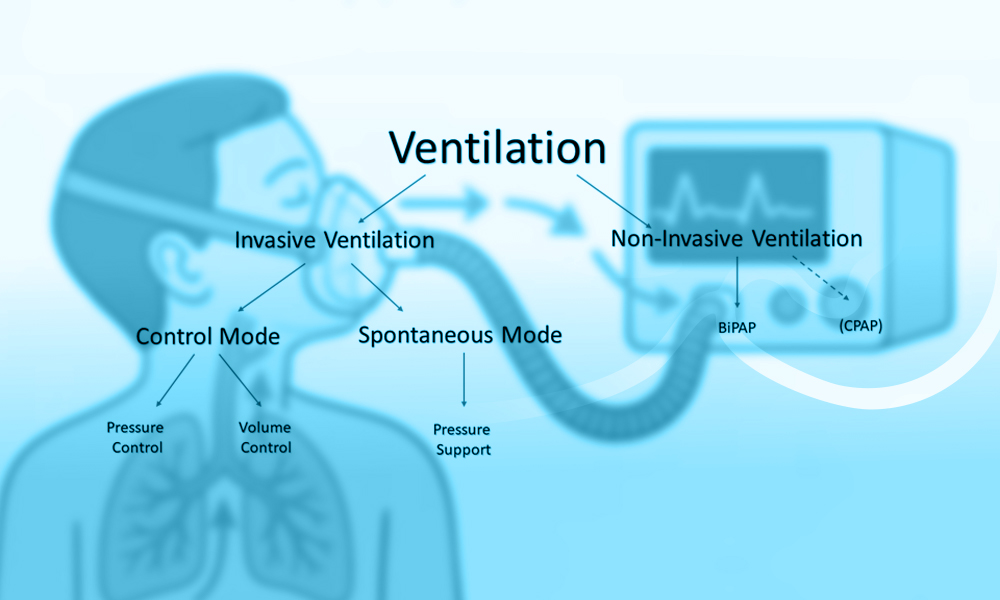
Mechanical ventilation is classified into invasive and non-invasive methods, each with specific applications based on the patient’s condition and therapeutic needs (9-11). Both types play a vital role in the management of acute respiratory failure (ARF), with the choice determined by the severity of respiratory dysfunction and the clinical response to treatment (10).

Non-Invasive Ventilation (NIV)

Non-invasive ventilation delivers respiratory support through a mask or nasal interface, avoiding the need for intubation. It is particularly effective in patients with mild to moderate ARF who are conscious and able to protect their airway.

  • Mechanism: NIV enhances oxygenation and ventilation using positive airway pressure, which prevents alveolar collapse and reduces the work of breathing.
  • Common Modes:
    • Continuous Positive Airway Pressure (CPAP): Maintains constant positive airway pressure throughout the respiratory cycle, improving oxygenation in conditions such as cardiogenic pulmonary edema.
    • Bilevel Positive Airway Pressure (BiPAP): Alternates between inspiratory positive airway pressure (IPAP) and expiratory positive airway pressure (EPAP), facilitating both oxygenation and ventilation, particularly in hypercapnic ARF seen in COPD exacerbations.
  • Clinical Application: NIV is widely used in exacerbations of chronic conditions like COPD, mild ARDS, and heart failure, where it can stabilize gas exchange and reduce the need for intubation.

Invasive Mechanical Ventilation (IMV)

In cases where non-invasive ventilation fails to stabilize ARF or is contraindicated, invasive mechanical ventilation provides controlled respiratory support through an endotracheal or tracheostomy tube.

  • Mechanism: IMV directly accesses the airway, ensuring precise delivery of oxygen, removal of carbon dioxide, and reduction of respiratory muscle workload. It also facilitates better protection against aspiration in patients with altered mental status or significant secretions.
  • Common Modes:
    • Assist-Control Ventilation (ACV): Delivers a preset tidal volume or pressure with every breath, whether initiated by the patient or the ventilator. ACV provides full respiratory support, ideal for patients with severe ARF and minimal respiratory effort.
    • Synchronized Intermittent Mandatory Ventilation (SIMV): Combines mandatory ventilator-delivered breaths with the patient’s spontaneous breaths. It is frequently used during weaning to encourage respiratory muscle activity.
    • Pressure Support Ventilation (PSV): Supports spontaneous breathing by delivering a set inspiratory pressure. It is commonly employed during recovery or as a step-down mode in the weaning process.
  • Clinical Application: IMV is indicated in severe ARF with refractory hypoxemia, hypercapnia unresponsive to NIV, or conditions like ARDS, where invasive strategies like lung-protective ventilation and high PEEP are essential.

Non-invasive ventilation often serves as the first-line treatment in ARF. However, in some cases, such as persistent hypoxemia, rising carbon dioxide levels, or respiratory distress that worsens despite NIV, transitioning to invasive mechanical ventilation becomes necessary to ensure adequate respiratory support and prevent further deterioration (9–11). The specific criteria and clinical scenarios guiding this transition will be examined in a subsequent section.

By tailoring the type of mechanical ventilation to the patient’s condition and response, clinicians can optimize outcomes while minimizing complications.

Modes of Mechanical Ventilation for ARF Treatment

The choice of mechanical ventilation mode in acute respiratory failure (ARF) is determined by the underlying pathology, severity of respiratory compromise, and patient-specific factors (11,12). Optimizing the mode of ventilation is essential to ensure adequate gas exchange while minimizing complications (12). Below, the most commonly used modes are outlined, with an emphasis on their applications and clinical significance.

Assist-Control Ventilation (ACV)

ACV provides full respiratory support by delivering a preset tidal volume (VT) or pressure with each breath, regardless of whether the breath is initiated by the patient or the ventilator.

  • Application: This mode is typically used in severe ARF, particularly in conditions such as ARDS or pneumonia, where patients may have minimal or absent spontaneous respiratory effort.
  • Advantages: Guarantees consistent ventilation and simplifies management in critically ill patients.

Synchronized Intermittent Mandatory Ventilation (SIMV)

SIMV delivers a set number of mandatory breaths, synchronized with the patient’s spontaneous respiratory efforts, allowing for unassisted breaths in between.

  • Application: Often employed as an intermediate step in patients transitioning from full ventilatory support to spontaneous breathing, such as during the weaning process.
  • Advantages: Promotes respiratory muscle activity while providing a safety net of mandatory ventilator breaths.

Pressure Support Ventilation (PSV)

PSV augments spontaneous breathing by providing a preset level of inspiratory pressure, reducing the effort required for inspiration.

  • Application: Commonly used in patients with preserved respiratory drive, such as those recovering from ARF or during non-invasive ventilation (NIV).
  • Advantages: Improves patient comfort, reduces work of breathing, and facilitates weaning from invasive ventilation.

Volume-Controlled and Pressure-Controlled Ventilation (VCV/PCV)

  • Volume-Controlled Ventilation (VCV) delivers a preset tidal volume, with airway pressure varying depending on lung compliance and resistance.

    Application: Used in patients requiring precise control of minute ventilation, such as those with hypercapnia.
  • Pressure-Controlled Ventilation (PCV) delivers a preset pressure during inspiration, with tidal volume varying based on lung compliance.

    Application: Beneficial in patients with reduced lung compliance, such as in ARDS, to limit peak airway pressures and reduce the risk of barotrauma.

High-Frequency Oscillatory Ventilation (HFOV)

HFOV delivers very small tidal volumes at high frequencies, maintaining continuous positive airway pressure.

  • Application: A rescue strategy for refractory hypoxemia in ARDS when conventional ventilation fails.
  • Advantages: Minimizes ventilator-induced lung injury (VILI) by preventing alveolar overdistension.

Clinical Significance

The selection of the appropriate mode of mechanical ventilation in ARF is crucial for optimizing outcomes and minimizing complications. For instance, lung-protective ventilation strategies, such as low tidal volume ventilation in ARDS, reduce the risk of ventilator-induced lung injury (11).
Modes like SIMV and PSV play key roles in facilitating weaning and restoring spontaneous respiratory function (11). By tailoring ventilation modes to the individual needs of patients, clinicians can address the specific pathophysiological challenges of ARF while improving survival and recovery rates (11-15).

Advanced Modes of Mechanical Ventilation: ASV, SAV, and NAVA

With the evolution of mechanical ventilation, advanced modes like Adaptive Support Ventilation (ASV), SmartCare/Automated Ventilation (SAV), and Neurally Adjusted Ventilatory Assist (NAVA) have emerged as pivotal tools in modern respiratory care. These modes leverage intelligent algorithms and neural control mechanisms to enhance patient outcomes, improve synchronization, and simplify clinical workflows. Below is a comprehensive discussion of each mode and its clinical significance (23-25).

Adaptive Support Ventilation (ASV)

  • What is ASV?
    ASV is an intelligent mode of mechanical ventilation that automatically adjusts ventilatory support based on the patient’s respiratory mechanics and effort. It uses algorithms to calculate the ideal tidal volume and respiratory rate based on the patient’s predicted body weight, lung compliance, and airway resistance (22-25).
  • How ASV Works:
    • ASV continuously monitors the patient’s spontaneous breathing.
    • It dynamically adjusts the inspiratory pressure and ventilatory rate to meet the patient’s metabolic demand while preventing over-distension or atelectasis.
    • This mode ensures minimal work of breathing while maintaining target minute ventilation.
  • Benefits of ASV:
    • Automatically reduces support as the patient’s respiratory effort improves, facilitating a smooth transition from controlled to spontaneous breathing.
    • Decreases the risk of hyperventilation, barotrauma, and ventilator-induced lung injury (VILI) (23,24).
    • Improves patient-ventilator synchrony, reducing discomfort and sedation requirements (24).
  • Evidence and Clinical Applications:
    • Studies have shown ASV to be effective in both acute and chronic respiratory failure. For example, research published in Critical Care (Arnal et al., 2008) demonstrated that ASV reduced ventilation duration compared to traditional modes in post-operative ICU patients (26).
    • It is widely used in settings requiring dynamic adaptation, such as weaning and managing variable lung mechanics in conditions like ARDS or COPD exacerbations (27).

SmartCare/Automated Ventilation (SAV)

  • What is SAV?
    SmartCare/Automated Ventilation is a closed-loop ventilation system designed primarily to automate the weaning process. It uses an artificial intelligence algorithm to assess and adjust ventilatory support based on real-time patient parameters (25,28-31).
  • How SAV Works:
    • SAV continuously monitors the patient’s respiratory rate, tidal volume, and end-tidal carbon dioxide (EtCO₂).
    • Based on these parameters, it adjusts pressure support levels to ensure adequate ventilation and oxygenation.
    • When the algorithm determines that the patient can sustain spontaneous breathing, it suggests readiness for extubation.
  • Benefits of SAV:
    • Speeds up the weaning process by reducing the need for manual adjustments (22-31).
    • Prevents premature or delayed extubation by following evidence-based criteria.
    • Reduces the workload for ICU staff and standardizes the weaning process.
  • Evidence and Clinical Applications:
    • Clinical trials, such as those published in Intensive Care Medicine (Lellouche et al., 2006), have shown that SmartCare reduces the duration of mechanical ventilation and ICU stay while improving extubation success rates (31).
    • SAV is especially useful in ICUs with high patient volumes or variability in care protocols (24-31).

Neurally Adjusted Ventilatory Assist (NAVA)

  • What is NAVA
    Neurally Adjusted Ventilatory Assist (NAVA) is an advanced mode of mechanical ventilation that directly uses the patient’s neural respiratory drive to control ventilatory support. Unlike traditional modes that rely on airway pressure or flow triggers, NAVA is driven by electrical activity in the diaphragm (Edi), offering highly personalized and precise ventilation (25-34).
  • How NAVA Works?

    Edi Catheter:
    A specialized nasogastric catheter detects electrical signals from the diaphragm during the patient’s spontaneous breathing efforts.

    Signal Processing:
    These signals (Edi) are analyzed in real-time to determine the timing, duration, and intensity of inspiratory effort.

    Ventilator Response:
    The ventilator delivers pressure support proportional to the patient’s effort, ensuring optimal synchronization and avoiding over-assistance or under-assistance.
  • Advantages of NAVA

    Improved Patient-Ventilator Synchrony:
    NAVA directly responds to the patient’s neural respiratory signals, eliminating delays and mismatches that occur with pressure or flow triggering.
    Reduces asynchrony-related complications, such as ineffective efforts, double triggering, and patient discomfort.

    Reduction in Sedation Needs:
    By providing natural, synchronized support, NAVA minimizes the discomfort associated with mechanical ventilation, reducing the need for sedatives.

    Enhanced Respiratory Muscle Protection:
    Unlike traditional modes that can over-assist, leading to respiratory muscle atrophy, NAVA ensures the diaphragm remains active, maintaining muscle strength and endurance.

    Personalized Ventilation:
    Adapts dynamically to the patient’s changing respiratory demands, particularly in conditions like ARDS, COPD, or neuromuscular disorders.
  • Clinical Applications of NAVA

    ARDS and Acute Respiratory Failure (ARF):
    NAVA provides lung-protective ventilation by avoiding overdistension and barotrauma while maintaining synchrony (38).

    Neonatal and Pediatric Ventilation:
    Especially useful in premature infants and pediatric patients, where synchrony challenges are common with traditional modes (36-37,39-43).

    Weaning:
    Facilitates a gradual reduction in ventilatory support by responding to the patient’s natural efforts (44-45).

    NAVA represents a significant advancement in mechanical ventilation, focusing on precision and patient-centric care by using the diaphragm’s electrical activity to guide support. Its ability to enhance patient-ventilator synchrony, reduce sedation needs, and protect respiratory muscles makes it an invaluable mode in both adult and pediatric populations. When combined with other modes like ASV and SAV, NAVA provides a versatile and comprehensive approach to managing acute respiratory failure.

When to Transition from Non-Invasive Mechanical Ventilation (NIMV) to Invasive Mechanical Ventilation (IMV) in ARF

Non-invasive mechanical ventilation (NIMV) is often the first-line treatment for acute respiratory failure (ARF) in specific conditions like COPD exacerbations or mild-to-moderate hypoxemia. However, in some cases, NIMV may fail to provide adequate support, requiring a transition to invasive mechanical ventilation (IMV) to prevent further deterioration. Here are the key indicators and clinical scenarios to consider transitioning:

1. Worsening Gas Exchange Despite NIMV

  • Signs:
    • Persistent or worsening hypoxemia (PaO₂ < 60 mmHg on FiO₂ ≥ 0.6).
    • Rising PaCO₂ (> 50 mmHg) with associated respiratory acidosis (pH < 7.25).
  • Reason: Indicates that NIMV is insufficient to meet oxygenation or ventilation demands.

2. Severe Respiratory Distress

  • Signs:
    • Increased respiratory rate (> 35 breaths/min).
    • Use of accessory muscles, paradoxical breathing, or nasal flaring.
    • Inability to speak in full sentences due to dyspnea.
  • Reason: Suggests that the patient’s work of breathing has exceeded the support provided by NIMV, risking respiratory muscle fatigue and collapse.

3. Altered Mental Status

  • Signs:
    • Confusion, agitation, or inability to cooperate with NIMV.
    • Progression to somnolence or coma (indicating hypercapnia or hypoxemia affecting cerebral function).
  • Reason: Neurological impairment reduces the ability to maintain spontaneous breathing or adhere to NIMV.

4. Hemodynamic Instability

  • Signs:
    • Hypotension (systolic blood pressure < 90 mmHg) unresponsive to fluid resuscitation.
    • Shock or signs of reduced cardiac output.
  • Reason: Indicates systemic compromise that requires better oxygenation and ventilation control via IMV.

5. Risk of Aspiration or Airway Protection Issues

  • Signs:
    • Inability to clear secretions or significant mucus plugging.
    • Frequent vomiting or risk of aspiration (e.g., altered consciousness).
  • Reason: IMV is necessary to secure the airway with an endotracheal tube to prevent aspiration-related complications.

6. Failure to Tolerate NIMV

  • Signs:
    • Poor mask seal due to facial anatomy or agitation.
    • Skin breakdown or discomfort causing discontinuation of therapy.
  • Reason: Intolerance to NIMV can reduce adherence, rendering it ineffective.

7. No Clinical Improvement Within 1–2 Hours of NIMV

  • Signs:
    • Lack of improvement in respiratory rate, gas exchange, or oxygenation after 1–2 hours of optimal NIMV.
  • Reason: Delaying the switch to IMV increases the risk of respiratory arrest and worsens outcomes.

The decision to switch from NIMV to IMV in ARF should be guided by clinical judgment, monitoring of gas exchange, respiratory mechanics, and overall patient stability. Early recognition of NIMV failure and timely intubation improve outcomes and prevent complications associated with delayed intervention (12-14, 16-21).

References

  1. Kapil S, Wilson JG. Mechanical Ventilation in Hypoxemic Respiratory Failure. Emerg Med Clin North Am. 2019;37(3):431-444. doi:10.1016/j.emc.2019.04.005
  2. Delerme S, Ray P. Acute respiratory failure in the elderly: diagnosis and prognosis. Age Ageing. 2008;37(3):251-257. doi:10.1093/ageing/afn060
  3. Antro C, Merico F, Urbino R, Gai V. Non-invasive ventilation as a first-line treatment for acute respiratory failure: “real life” experience in the emergency department. Emerg Med J. 2005;22(11):772-777. doi:10.1136/emj.2004.018309
  4. Piraino T. Noninvasive Respiratory Support in Acute Hypoxemic Respiratory Failure. Respir Care. 2019;64(6):638-646. doi:10.4187/respcare.06735
  5. Abellan C, Bertin C, Fumeaux T, Carrel L. Insuffisance respiratoire aiguë : prise en charge hospitalière non invasive [Acute respiratory failure : non-invasive hospital management]. Rev Med Suisse. 2020;16(705):1636-1644.
  6. Munshi L, Mancebo J, Brochard LJ. Noninvasive Respiratory Support for Adults with Acute Respiratory Failure. N Engl J Med. 2022;387(18):1688-1698. doi:10.1056/NEJMra2204556
  7. Pisani L, Corcione N, Nava S. Management of acute hypercapnic respiratory failure. Curr Opin Crit Care. 2016;22(1):45-52. doi:10.1097/MCC.0000000000000269
  8. Liu YJ, Zhao J, Tang H. Non-invasive ventilation in acute respiratory failure: a meta-analysis. Clin Med (Lond). 2016;16(6):514-523. doi:10.7861/clinmedicine.16-6-514
  9. Pham T, Brochard LJ, Slutsky AS. Mechanical Ventilation: State of the Art. Mayo Clin Proc. 2017;92(9):1382-1400. doi:10.1016/j.mayocp.2017.05.004
  10. Tobin MJ, Laghi F, Jubran A. Ventilatory failure, ventilator support, and ventilator weaning. Compr Physiol. 2012;2(4):2871-2921. doi:10.1002/cphy.c110030
  11. Tobin, M. J. (2013). Principles and practice of mechanical ventilation, 3e. McGraw-Hill Education LLC.
  12. Pinsky MR. Toward a better ventilation strategy for patients with acute lung injury. Crit Care. 2000;4(4):205-206. doi:10.1186/cc695
  13. Rochwerg B, Brochard L, Elliott MW, et al. Official ERS/ATS clinical practice guidelines: noninvasive ventilation for acute respiratory failure. Eur Respir J. 2017;50(2):1602426. Published 2017 Aug 31. doi:10.1183/13993003.02426-2016
  14. Torres A, Niederman MS, Chastre J, et al. International ERS/ESICM/ESCMID/ALAT guidelines for the management of hospital-acquired pneumonia and ventilator-associated pneumonia: Guidelines for the management of hospital-acquired pneumonia (HAP)/ventilator-associated pneumonia (VAP) of the European Respiratory Society (ERS), European Society of Intensive Care Medicine (ESICM), European Society of Clinical Microbiology and Infectious Diseases (ESCMID) and Asociación Latinoamericana del Tórax (ALAT). Eur Respir J. 2017;50(3):1700582. Published 2017 Sep 10. doi:10.1183/13993003.00582-2017
  15. Oczkowski S, Ergan B, Bos L, et al. ERS clinical practice guidelines: high-flow nasal cannula in acute respiratory failure. Eur Respir J. 2022;59(4):2101574. Published 2022 Apr 14. doi:10.1183/13993003.01574-2021
  16. Luo F, Annane D, Orlikowski D, et al. Invasive versus non-invasive ventilation for acute respiratory failure in neuromuscular disease and chest wall disorders. Cochrane Database Syst Rev. 2017;12(12):CD008380. Published 2017 Dec 4. doi:10.1002/14651858.CD008380.pub2
  17. Blumenthal JA, Duvall MG. Invasive and noninvasive ventilation strategies for acute respiratory failure in children with coronavirus disease 2019. Curr Opin Pediatr. 2021;33(3):311-318. doi:10.1097/MOP.0000000000001021
  18. Shang P, Zhu M, Baker M, Feng J, Zhou C, Zhang HL. Mechanical ventilation in Guillain-Barré syndrome. Expert Rev Clin Immunol. 2020;16(11):1053-1064. doi:10.1080/1744666X.2021.1840355
  19. Davidson AC, Banham S, Elliott M, et al. BTS/ICS guideline for the ventilatory management of acute hypercapnic respiratory failure in adults [published correction appears in Thorax. 2017 Jun;72(6):588. doi: 10.1136/thoraxjnl-2015-208209corr1]. Thorax. 2016;71 Suppl 2:ii1-ii35. doi:10.1136/thoraxjnl-2015-208209      
  20. Kress JP, O’Connor MF, Schmidt GA. Clinical examination reliably detects intrinsic positive end-expiratory pressure in critically ill, mechanically ventilated patients. Am J Respir Crit Care Med. 1999;159(1):290-294. doi:10.1164/ajrccm.159.1.9805011
  21. Rittayamai N, Katsios CM, Beloncle F, Friedrich JO, Mancebo J, Brochard L. Pressure-Controlled vs Volume-Controlled Ventilation in Acute Respiratory Failure: A Physiology-Based Narrative and Systematic Review. Chest. 2015;148(2):340-355. doi:10.1378/chest.14-3169
  22. Brunner JX, Iotti GA. Adaptive Support Ventilation (ASV). Minerva Anestesiol. 2002;68(5):365-368.
  23. Dai YL, Hsu RJ, Huang HK, et al. Adaptive support ventilation attenuates postpneumonectomy acute lung injury in a porcine model. Interact Cardiovasc Thorac Surg. 2020;31(5):718-726. doi:10.1093/icvts/ivaa157
  24. Buiteman-Kruizinga LA, Mkadmi HE, Schultz MJ, Tangkau PL, van der Heiden PLJ. Comparison of Mechanical Power During Adaptive Support Ventilation Versus Nonautomated Pressure-Controlled Ventilation-A Pilot Study. Crit Care Explor. 2021;3(2):e0335. Published 2021 Feb 15. doi:10.1097/CCE.0000000000000335
  25. Fernández J, Miguelena D, Mulett H, Godoy J, Martinón-Torres F. Adaptive support ventilation: State of the art review. Indian J Crit Care Med. 2013;17(1):16-22. doi:10.4103/0972-5229.112149
  26. Arnal JM, Wysocki M, Nafati C, et al. Automatic selection of breathing pattern using adaptive support ventilation. Intensive Care Med. 2008;34(1):75-81. doi:10.1007/s00134-007-0847-0
  27. Zhu F, Gomersall CD, Ng SK, Underwood MJ, Lee A. A randomized controlled trial of adaptive support ventilation mode to wean patients after fast-track cardiac valvular surgery. Anesthesiology. 2015;122(4):832-840. doi:10.1097/ALN.0000000000000589
  28. Rose L, Schultz MJ, Cardwell CR, Jouvet P, McAuley DF, Blackwood B. Automated versus non-automated weaning for reducing the duration of mechanical ventilation for critically ill adults and children. Cochrane Database Syst Rev. 2014;2014(6):CD009235. Published 2014 Jun 10. doi:10.1002/14651858.CD009235.pub3
  29. Rose L, Schultz MJ, Cardwell CR, Jouvet P, McAuley DF, Blackwood B. Automated versus non-automated weaning for reducing the duration of mechanical ventilation for critically ill adults and children: a cochrane systematic review and meta-analysis. Crit Care. 2015;19(1):48. Published 2015 Feb 24. doi:10.1186/s13054-015-0755-6
  30. Wysocki M, Jouvet P, Jaber S. Closed loop mechanical ventilation. J Clin Monit Comput. 2014;28(1):49-56. doi:10.1007/s10877-013-9465-2
  31. Lellouche F, Mancebo J, Jolliet P, et al. A multicenter randomized trial of computer-driven protocolized weaning from mechanical ventilation. Am J Respir Crit Care Med. 2006;174(8):894-900. doi:10.1164/rccm.200511-1780OC
  32. Shah SD, Anjum F. Neurally Adjusted Ventilatory Assist (NAVA). In: StatPearls. Treasure Island (FL): StatPearls Publishing; May 22, 2023.
  33. Navalesi P, Longhini F. Neurally adjusted ventilatory assist. Curr Opin Crit Care. 2015;21(1):58-64. doi:10.1097/MCC.0000000000000167
  34. Sheng Y, Shao W, Wang Y, Kang X, Hu R. Zhonghua Wei Zhong Bing Ji Jiu Yi Xue. 2023;35(11):1229-1232. doi:10.3760/cma.j.cn121430-20230222-00101
  35. Vahedi NB, Ramazan-Yousif L, Andersen TS, Jensen HI. Implementation of Neurally Adjusted Ventilatory Assist (NAVA): Patient characteristics and staff experiences. J Healthc Qual Res. 2020;35(4):253-260. doi:10.1016/j.jhqr.2020.03.008
  36. Mandyam S, Qureshi M, Katamreddy Y, et al. Neurally Adjusted Ventilatory Assist Versus Pressure Support Ventilation: A Comprehensive Review. J Intensive Care Med. 2024;39(12):1194-1203. doi:10.1177/08850666231212807
  37. Sugunan P, Hosheh O, Garcia Cusco M, Mildner R. Neurally-Adjusted Ventilatory Assist (NAVA) versus Pneumatically Synchronized Ventilation Modes in Children Admitted to PICU. J Clin Med. 2021;10(15):3393. Published 2021 Jul 30. doi:10.3390/jcm10153393
  38. Umbrello M, Antonucci E, Muttini S. Neurally Adjusted Ventilatory Assist in Acute Respiratory Failure-A Narrative Review. J Clin Med. 2022;11(7):1863. Published 2022 Mar 28. doi:10.3390/jcm11071863
  39. Beck J, Emeriaud G, Liu Y, Sinderby C. Neurally-adjusted ventilatory assist (NAVA) in children: a systematic review. Minerva Anestesiol. 2016;82(8):874-883.
  40. Minamitani Y, Miyahara N, Saito K, Kanai M, Namba F, Ota E. Noninvasive neurally-adjusted ventilatory assist in preterm infants: a systematic review and meta-analysis. J Matern Fetal Neonatal Med. 2024;37(1):2415373. doi:10.1080/14767058.2024.2415373
  41.  Fang SJ, Su CH, Liao DL, et al. Neurally adjusted ventilatory assist for rapid weaning in preterm infants. Pediatr Int. 2023;65(1):e15360. doi:10.1111/ped.15360
  42. Rossor TE, Hunt KA, Shetty S, Greenough A. Neurally adjusted ventilatory assist compared to other forms of triggered ventilation for neonatal respiratory support. Cochrane Database Syst Rev. 2017;10(10):CD012251. Published 2017 Oct 27. doi:10.1002/14651858.CD012251.pub2
  43. Stein H, Beck J, Dunn M. Non-invasive ventilation with neurally adjusted ventilatory assist in newborns. Semin Fetal Neonatal Med. 2016;21(3):154-161. doi:10.1016/j.siny.2016.01.006
  44. Liu L, Xu X, Sun Q, et al. Neurally Adjusted Ventilatory Assist versus Pressure Support Ventilation in Difficult Weaning: A Randomized Trial. Anesthesiology. 2020;132(6):1482-1493. doi:10.1097/ALN.0000000000003207
  45. Yuan X, Lu X, Chao Y, et al. Neurally adjusted ventilatory assist as a weaning mode for adults with invasive mechanical ventilation: a systematic review and meta-analysis. Crit Care. 2021;25(1):222. Published 2021 Jun 29. doi:10.1186/s13054-021-03644-z

Blog_Cover1

Acute Respiratory Failure: Causes and Mechanisms

Acute respiratory failure (ARF) is a critical condition characterized by the respiratory system’s inability to maintain adequate gas exchange, presenting an immediate threat to life. Its etiologies encompass a wide range of conditions, including acute respiratory distress syndrome (ARDS), pneumonia, exacerbations of chronic obstructive pulmonary disease (COPD), and neuromuscular disorders, all necessitating timely and effective intervention.

Acute respiratory failure (ARF) is a life-threatening condition defined by the respiratory system’s inability to maintain adequate gas exchange, resulting in critically low oxygen levels in the blood (hypoxemia), elevated carbon dioxide levels (hypercapnia), or a combination of both (1). ARF can result from diverse etiologies, including acute respiratory distress syndrome (ARDS), pneumonia, chronic obstructive pulmonary disease (COPD) exacerbations, pulmonary embolism, neuromuscular disorders, or trauma (2, 3). These conditions impair the lung’s capacity to oxygenate blood and eliminate carbon dioxide, leading to severe systemic consequences if not managed promptly and effectively.

What is Acute Respiratory Failure?

Acute respiratory failure (ARF) is a medical condition in which the respiratory system fails to perform its primary function of effective gas exchange. This failure leads to inadequate oxygenation of the blood (hypoxemia), impaired elimination of carbon dioxide from the body (hypercapnia), or both (1). ARF can develop rapidly as a result of various underlying pathologies affecting the lungs, airways, chest wall, or central nervous system (2, 3).

ARF is often a life-threatening emergency that necessitates immediate medical intervention to prevent severe complications or death.

Basic Physiology of the Respiratory System

The primary role of the respiratory system is to facilitate gas exchange, ensuring oxygen delivery to tissues and carbon dioxide removal. This process depends on the proper functioning of several components (5–7):

  1. Ventilation: The physical movement of air into and out of the lungs, determined by respiratory muscle effort and airway patency.
  2. Diffusion: The exchange of gases between the alveoli and pulmonary capillaries, driven by partial pressure gradients.
  3. Perfusion: The blood flow through pulmonary capillaries, enabling gas exchange.

In ARF, a disruption in one or more of these components impairs gas exchange:

  • Hypoxemic ARF: Defined as PaO₂ < 60 mmHg with normal or low PaCO₂, resulting from impaired oxygenation.
  • Hypercapnic ARF: Defined as PaCO₂ > 45 mmHg with acidemia, caused by inadequate ventilation.

Pathophysiological Mechanisms of ARF

MechanismDefinitionCausesEffect
Ventilation-Perfusion (V/Q) MismatchMismatch between ventilated and perfused lung areas.Pulmonary embolism, pneumonia, atelectasis.Hypoxemia.
Diffusion ImpairmentReduced oxygen transfer across the alveolar-capillary membrane.ARDS, pulmonary fibrosis, interstitial pneumonia.Hypoxemia despite adequate ventilation.
HypoventilationReduced air movement in and out of the lungs, leading to CO₂ retention.CNS depression, neuromuscular disorders, obesity.Hypercapnia and secondary hypoxemia.
ShuntingBlood bypasses ventilated alveoli, preventing oxygenation.ARDS, pneumonia, large atelectasis.Severe hypoxemia unresponsive to oxygen therapy.
Increased Work of BreathingRespiratory muscles overwork to overcome resistance or poor compliance.COPD exacerbations, asthma, ARDS.Respiratory fatigue and eventual failure.
Table 1: Pathophysiological Mechanisms of ARF

Ventilation-Perfusion (V/Q) Mismatch

  • Definition: A mismatch occurs when areas of the lungs are ventilated but not perfused, or perfused but not ventilated.
  • Causes: Pulmonary embolism (low perfusion), pneumonia, or atelectasis (low ventilation).
  • Effect: Impairs oxygen delivery and carbon dioxide removal, causing hypoxemia.

Diffusion Impairment

  • Definition: Thickening or damage to the alveolar-capillary membrane reduces oxygen transfer to the blood.
  • Causes: Pulmonary fibrosis, ARDS, or severe interstitial pneumonia.
  • Effect: Decreases arterial oxygenation despite adequate ventilation.

Hypoventilation

  • Definition: Reduced air movement in and out of the lungs leads to insufficient CO₂ elimination.
  • Causes: Central nervous system depression (e.g., drug overdose), neuromuscular disorders (e.g., Guillain-Barré syndrome), or severe obesity.
  • Effect: Causes hypercapnia and secondary hypoxemia.

Shunting

  • Definition: Blood flows through areas of the lungs without gas exchange, bypassing functional alveoli.
  • Causes: ARDS, pneumonia, or large atelectasis.
  • Effect: Results in severe hypoxemia unresponsive to oxygen therapy.

Increased Work of Breathing

  • Definition: Respiratory muscles work harder to overcome airway resistance or reduced lung compliance.
  • Causes: COPD exacerbations, asthma, or ARDS.
  • Effect: Leads to respiratory muscle fatigue and eventual failure.

What are the Main Causes of Acute Respiratory Failure?

CategoryCausesExamples
Pulmonary CausesConditions directly impairing lung function.ARDS, pneumonia, COPD exacerbations, asthma, pulmonary embolism.
Extrapulmonary CausesConditions indirectly affecting the respiratory system.Neuromuscular disorders, CNS depression, thoracic cage abnormalities.
Trauma and External FactorsPhysical trauma or external agents affecting ventilation.Chest trauma, sedative overdose, toxins, or neuromuscular blockers.
Table 2: Main Causes of ARF

Acute respiratory failure (ARF) arises from a wide range of conditions affecting the respiratory system or its control mechanisms. These causes are broadly categorized as pulmonary causes, such as ARDS and pneumonia, directly impair lung function, while extrapulmonary causes, including neuromuscular disorders and CNS depression, indirectly disrupt respiratory mechanics:

Pulmonary Causes

  • Acute Respiratory Distress Syndrome (ARDS): Severe lung inflammation and alveolar damage leading to profound hypoxemia.
  • Pneumonia: Infectious consolidation of lung tissue impairs ventilation and gas exchange.
  • Chronic Obstructive Pulmonary Disease (COPD) Exacerbations: Increased airway obstruction and gas trapping result in hypercapnia.
  • Asthma: Severe bronchoconstriction impairs airflow, causing hypoxemia and hypercapnia.
  • Pulmonary Embolism (PE): Blockage of pulmonary arteries disrupts perfusion.

Extrapulmonary Causes

  • Neuromuscular Disorders: Conditions like Guillain-Barré syndrome or myasthenia gravis weaken respiratory muscles, reducing ventilation.
  • Central Nervous System Depression: Stroke, trauma, or sedative overdose impairs respiratory drive.
  • Thoracic Cage Abnormalities: Structural conditions such as kyphoscoliosis limit lung expansion.
  • Obesity Hypoventilation Syndrome: Excess weight restricts chest wall movement, leading to hypoventilation.

Trauma and External Factors

  • Chest Trauma: Rib fractures or pneumothorax compromise ventilation mechanics.
  • Toxins and Medications: Sedatives, opioids, or neuromuscular blockers depress respiratory effort or muscle function.

ARF is a multifaceted condition with diverse etiologies that disrupt normal respiratory physiology (3). Hypoxemia and hypercapnia serve as key markers of dysfunction, emphasizing the importance of understanding the underlying pathology for timely and effective management. Accurate diagnosis and targeted interventions, including mechanical ventilation, are essential to restoring respiratory function and preventing severe complications.

References

  1. Rochwerg B, Brochard L, Elliott MW, et al. Official ERS/ATS clinical practice guidelines: noninvasive ventilation for acute respiratory failure. Eur Respir J. 2017;50(2):1602426. Published 2017 Aug 31. doi:10.1183/13993003.02426-2016
  2. Chen L, Rackley CR. Diagnosis and Epidemiology of Acute Respiratory Failure. Crit Care Clin. 2024;40(2):221-233. doi:10.1016/j.ccc.2023.12.001
  3. Bos LDJ, Ware LB. Acute respiratory distress syndrome: causes, pathophysiology, and phenotypes. Lancet. 2022;400(10358):1145-1156. doi:10.1016/S0140-6736(22)01485-4
  4. Villgran VD, Lyons C, Nasrullah A, Clarisse Abalos C, Bihler E, Alhajhusain A. Acute Respiratory Failure. Crit Care Nurs Q. 2022;45(3):233-247. doi:10.1097/CNQ.0000000000000408
  5. Haddad M, Sharma S. Physiology, Lung. In: StatPearls. Treasure Island (FL): StatPearls Publishing; July 20, 2023.
  6. Roussos C, Koutsoukou A. Respiratory failure. Eur Respir J Suppl. 2003;47:3s-14s. doi:10.1183/09031936.03.000385037.     Ware LB. Pathophysiology of acute lung injury and the acute respiratory distress syndrome. Semin Respir Crit Care Med. 2006;27(4):337-349. doi:10.1055/s-2006-948288
  7. Ware LB. Pathophysiology of acute lung injury and the acute respiratory distress syndrome. Semin Respir Crit Care Med. 2006;27(4):337-349. doi:10.1055/s-2006-948288
Ventilator Maintenance Blog Cover Photo

How Is A Mechanical Ventilator Maintained And Cleaned: Latest Practical Information and Guidelines

When talking about life-saving equipment that has helped thousands of lives, mechanical ventilators are one of them. Even scientists and most medical providers often refer to them as a channel of breath for life as they are devices built to enhance respiration. In fact, some of these breath power equipment also help with the intake of drugs. However, despite the supportive nature of ventilators, like a sturdy bridge, they can also be hazardous if faulty. So to prevent your device from breaking down you need to always carry out routine ventilator cleaning procedures. 

Therefore, what are the basic guidelines for maintaining ventilators effectively? Hey! The answer to your question is right here at your fingertip. Keep scrolling, as this blog provides you with some of the latest, integral information and tips you need to know about efficient ventilator maintenance. (1,2)

Ventilator Maintenance

Cleaning Protocols for Ensuring Ventilator Hygiene

You will agree with me that every procedure and guideline requires an ideal protocol. Therefore, before taking any steps to clean your ventilators, certain pre-cleaning procedures should be carried out. Some of these hygienic ventilator cleaning customs are:

Using Sanitized Hands to Clean

First and foremost, before you begin any operation, it’s very important to wash your hands thoroughly under running water. Doing this with the application of antiseptic soap can also help reduce the transmission of germs. Also, this hand sanitation process is applicable while operating many devices and finally when you are done with the whole process for ventilator maintenance

Inspect Device Regularly

Regardless of not being put to use, it’s essential for you to always carry out routine checks on your device. With this regular examination, some damages or wear and tear complications can be determined and noted. In addition, during ventilation cleaning you may encounter some things out of normal. It’s advisable to note them and find a solution as soon as possible.  

Routine Disinfection

Another protocol for ventilation maintenance is adherence to the sanitation and disinfection guidelines provided by the manufacturer. The reason for this is to avoid production complications. Although, oftentimes, these disinfection guidelines usually involve the cleaning of surfaces like knobs, touchscreens, buttons, tubes, and lots more. However, if you aren’t provided with the basic cleaning directions, you can also make use of the 10 steps for routine MV maintenance.

Keep the Ventilator in a Safe Place

Finally, according to most manufacturer’s guidelines, medical devices like MV must always be kept in a cool dry place after use. A good storage system is also Therefore, after using your ventilator, you need to keep it in an appropriate place, so as to prevent and maintain its integrity.  

Ventilator Maintenance photo 2

Routine Maintenance Procedures for Mechanical Ventilators 

If you want to channel cleanliness into other areas like medical ventilator maintenance, some regular step-by-step procedures are highly required. Therefore, are you wondering about what these maintenance procedures are? Below are the almighty 10 steps for routine MV maintenance.

  • Step 1: To start with, you need to first of all examine the respiratory device physically for any obvious damages. 
  • Step 2: Your next procedure to prevent the spread of germs is to sanitize the device and evaluate the performance and functionality of your ventilator.
  • Step 3: Another important ventilator maintenance step is to thoroughly clean all oxygen filters, collection vials, and power fans. Note: Be very careful when handling these parts.
  • Step 4: You must also check the expiratory valve properly and ensure there are no leakages.
  • Step 5: Additionally, you need to ensure that the tubes aren’t accumulating moisture in order to prevent inconvenient breathing support.
  • Step 6: After the tube assessment, the next step you need to take is to carefully examine your oxygen supply alongside its flow rate. This is very crucial as the life of your patient depends on it.
  • Step 7: Don’t forget to check and see if every alarm is functioning.
  • Step 8: Lest you forget the importance of oxygen sensor calibration. Therefore, always put into practice to adjust your oxygen flow to standard.
  • Step 9: Furthermore, familiarize yourself with the ventilators’ backup emergency system and safety features. 
  • Step 10: Finally, before you round up, always ensure the battery is completely charged and take note of the next preventive check date.
Essential Safety Precautions During Ventilator Maintenance

Essential Safety Precautions During Ventilator Maintenance

On most occasions, carelessness is one of the major elements that often cause the breaking down of people’s devices. However, in some cases, some individuals often injure themselves or damage equipment because they don’t know the essential precautions that must be carried out. Therefore, if you are among this set of people, below are some crucial safety measures for ventilator maintenance. 

  1. The mechanical service of a ventilator must be carried out by a professional.
  2. Ensure to always switch off and unplug devices from the electric source.
  3. Always put on protective materials like gloves, face shields, etc, before the commencement of the procedure. 
  4. Make sure you follow your manufacturer’s guidelines to clean and maintain your ventilator.
  5. Another key component is setting your ventilator to its required standard and rechecking before the O2 supply for confirmation. 
  6. In addition, get a backup system available in case of any unforeseen circumstances.
Training and Education for Ventilator Maintenance Personnel

Training and Education for Ventilator Maintenance Personnel

In addition to the competence of medical professionals, the use of potent medical technology and devices is very important. They are equipment that provides high-quality treatment and healthcare supplies. These powerful systems, like mechanical ventilation, always require the assistance of professional operators. Because, without an operating expert, it may be helpless at times. Therefore, getting the best from your ventilator requires comprehensive ventilator maintenance training and educational sessions. If you are looking for a reliable source to know the in-depth features of your ventilator? Biosys Biomedicals gart you covered.

Troubleshooting Common Issues in Mechanical Ventilation

Several problems may occur to a respiratory support system due to wear and tear or any other condition. However, one of the most common and very dangerous issues is inadequate ventilation. If you notice that your MV is delivering less oxygen than it should, you must disconnect the ventilator and listen for a hissing sound from the ET tube. If hissing is present, connect an Ambu bag and assess lung compliance. After that, you can check the tube position and tweak the ventilator settings. However, if you are unable to solve the problem, you can reach out to a ventilator maintenance expert for assistance. 

Complications with Standards and Regulations in Ventilator Maintenance (8)

As indicated above, there are protocols for doing things when it comes to the aspect of ventilator cleaning. Most of these protocols are integral standards or regulations from the manufacturer and even experts. However, a deviation from this lay down instructions may lead to various problems such as a faulty ventilation system, going against regulatory bodies, risks to patient safety, reduced device integrity, etc. 

Future Trends and Innovations in Mechanical Ventilator Maintenance (10)

With the various advancements in science and health, some potential improvements are said to emerge in ventilator maintenance. Some of these proposed future directions, such as predictive maintenance and real-time monitoring, are already coming to the limelight. Also, other predicted trends and innovations like AR tech assistance, virtual reality training programs, and automatic routine maintenance systems are yet to come. So worry less, as a supportive AI system for ventilator cleaning is on its way.

Mechanical Ventilator Maintenance

Ventilator Care Support from Biosys Biomedical

Having the latest information about ventilator maintenance is like unlocking the secret to effective respiratory support. Even though these maintenance guidelines involve some basic step-by-step cleaning procedures, their protocols are standards that must be followed. However, to perfectly repair and troubleshoot common issues that may occur a comprehensive training and education program is very important. 

Therefore, if you want to prevent complications caused by regulation glitches, a reliable source such as Biosys Biomedical is readily available to connect you with future trends in ventilator cleaning. So, for effective breathing support maintenance, get in touch with us right now!

References